Sequel ties
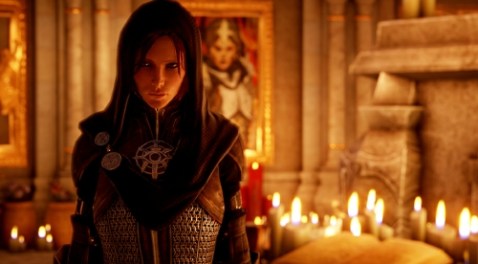
The fact that she could theoretically be dead is apparently something people have a great deal of investment in.
In the earliest days of video games, it was very easy to understand how sequels to a game would work. You had a title, then you had a number after that title. Maybe a subtitle if you were feeling fancy. Once you loaded up that sequel, you were starting back from the same position as someone who had never played the predecessor, because of course you were. That was just how it worked. There’s a reason why early series either had stories that were only loosely connected by theme (Final Fantasy or Ultima, for example), protagonists who had reason not to carry things over from prior titles (Metal Gear), or were produced by companies that don’t care about your stupid continuity (Every Capcom Game Ever).
We are no longer in those earliest days now, though. In order to properly play Dragon Age: Inquisition, I had to log into an external website and recount all of the things I had done during my playthroughs of Dragon Age: Origins and Dragon Age II to ensure that the world was still one I recognized. And that’s worth discussing, because if you think about it that’s both kind of strange and kind of brilliant.
The Final Fantasy Project: Final Fantasy IV: The After Years, part 10

Artwork from a sketch by Yoshitaka Amano
All right, people, let’s talk about villains.
Redeeming a villain is at once the best and worst thing you can do to them. It’s super tempting, obviously, because when written well a villain is easily one of the most fascinating characters in a story. So now you get one of the most interesting characters in the story as someone the audience can actually cheer for, which is why the temptation arises. Yet a redeemed villain has to be different than their original villainous incarnation, often meaning that they set aside the cool stuff that made them likable in the first place.
Yes, it can be done; Emma Frost was a prime example of taking a villainous character and making her a protagonist with good aims rather than necessarily a hero in her early days (that’s kind of been undone with years of character decay). It just doesn’t happen frequently. I bring all of that up because The After Years is wandering into that territory now, and given the game’s narrative chops and track record up to this point, you will hopefully forgive me if I don’t have the utmost confidence in the game’s ability to do a complex concept justice.
Hard Project: Guitar Hero

I have no regrets about five-starring Through the Fire and the Flames, but I think I was pretty much done afterward.
In 2004, nobody would have predicted that one of the most popular video games would involve standing in front of your television with a fake plastic guitar and pretending to play music. In 2011, the idea seems pretty ridiculous. And yet the Guitar Hero franchise exploded in 2005, enjoyed huge popularity, then violently collapsed and can now be found littering bargain trade-in bins sans guitar. Not that it’s alone in this; the Rock Band franchise dropped in the same timeframe, which for those who don’t remember was the spiritual successor by the same team as the original Guitar Hero.
Fads in gaming are nothing new, but the sheer popularity and the sudden drop-off is worth exploring. It’s an astonishingly quick rise and fall, and it’s not as if the core idea – “pretend to play music” – suddenly became forbidden like whatever the plot was in that Aerosmith video game. But when you think about it, it’s less a matter of surprise that the games didn’t last forever and more a surprise that they were ever a thing at all, because they’re the definition of a hard project.
Demo Driver 8: Running With Rifles
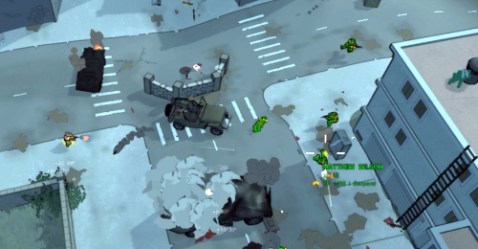
It’s basically like playing with your army men, except you only get one guy and no further control over things.
We are living in the year 2015 of the common era, and folks, I’m as ashamed to write this as you are to read this, but your demo should include a tutorial. You should do the bare minimum necessary to ensure that when someone loads your game they are aware of what in the ever-loving hell they’re doing, because the alternative is both stupid and awful. Precisely one game has ever gotten away with throwing you in sans any tutorial, and that was Worms, which succeeded chiefly on the strength of making progress almost a secondary objective.
Yes, I could write entire articles about my love of Worms. And in this case, the comparison is not entirely unwarranted, as Running With Rifles shares some traits with that venerable squad-based deathmatch. Sadly, it lacks the wit and humor that define that franchise. It also lacks a tutorial, hence my irritation. There’s a lot of stuff going on in Running With Rifles that isn’t really explained, which pushes some of the game’s central conceits out of focus and make it seem less fun than it might be.
 Recent Work
- An error has occurred; the feed is probably down. Try again later.
Chocobo Dash
- An error has occurred; the feed is probably down. Try again later.
 Eliot Lefebvre