Mangling terms

Sometimes, admittedly, it’s not necessary to call a game a clone to get an idea of how it plays.
Remember when “clone” wasn’t a term of scorn when discussing a video game?
When people first started saying thing like “Saints Row is a clone of Grand Theft Auto III,” it was actually conveying useful information. Considering the sheer number of games available and the tendency for a new game to closely emulate previous games with a few changes, “X-clone” can often be more descriptive than a simple genre listing. Sure, both New Super Mario Bros. and Sonic the Hedgehog 4 are side-scrolling platformers, but saying that a game is a clone of New Super Mario Bros. provides far more relevant information about how the game plays.
Not that it matters any more, because if you call something a clone of another game, the implication is that it’s a bad game. Because calling things clones has fallen victim to an odd part of discussing games, where we as a culture somehow manage to create and then destroy the terminology we would use to discuss this stuff. It happens everywhere given time, but when it comes to game our new terminology seems to have a half-life of ten minutes before it becomes totally useless.
Uniquely game-based horror
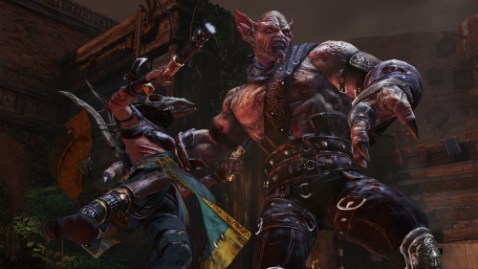
No, I’m not quite talking about the horror inherent in realizing that this is probably both the revival and the end of the Legacy of Kain franchise.
Video games have a lot of potential for horror that I don’t think we’re tapping into. I’m not just talking about transparent crap like marketing games with zombies as “survival horror” so much as obvious avenues of game design that just don’t get tapped. And part of that is preying upon the sorts of horror that don’t exist outside of video games.
Unlike most forms of horror, video games have a requirement for audience participation. You don’t watch games, you play them. There are certain tricks that implies which just can’t be pulled off when you have an entire audience sitting and watching. There are ways to make games feel more horrifying that really lean on the fact that these are games, that players are playing them, that you can hit a sense of powerlessness for the players at a more primal level. There’s stuff that’s scary without requiring big claws or teeth or any combination thereof.
So let’s talk scary, and let’s see how games can really screw with the heads of players with some simple (and kind of horrible) tricks.
Hard Project: Zombies

Ironically, this genre seems almost impossible to actually kill.
I love zombie fiction. I absolutely hate most video games that feature zombies. And there’s a good reason for that, largely stemming from the fact that the two bear only the slightest connection to one another.
Let it not be said that you do not have your options for zombie games if you want them. The Walking Dead has been doing quite well for itself. DayZ is out in early testing that only asks you to, you know, purchase it before you can test it. (That seems backwards to me, but that’s a different article.) Dead Rising is a thing, State of Decay is a thing, Left 4 Dead is a thing, and hell, Plants vs. Zombies is out there. That’s not even counting the numerous games which feature zombies as a sideline – arguably the Husks of Mass Effect are close cousins.
But I don’t really like zombie games all that much, and even the games that I’m listing don’t seem to really like zombies all that much. Which is why I’m listing this as a hard project, because it turns out that making a zombie game is a very different prospect from writing zombie horror, and the two don’t go together nicely.
That’s not really scary

I’ve heard very good things about this game and pray it does not disappoint me.
It’s Halloween! By which of course I mean it is October, which might as well be a solid month of Halloween for all I care. I say this while also having a wedding anniversary and a professional anniversary in October. Halloween all day every day, from October 1st to October 31st. Possibly a bit further in either direction, too. I like Halloween a lot is what I’m getting at.
But as I settle in for another annual trip through every horror-themed movie, game, and novel I can find that I had held back for October, I know I’m going to run into some of the same stupid and tired crap that I find every single year. There’s a reason that for a long while I disliked horror in general and survival horror in games, and it was simply a result of getting so accustomed to crappy half-baked non-horror stuff that gets shoved along with it that I sort of tuned the whole thing out as terrible. I’m better now, but let’s be frank – what’s following is not really scary.
Easy villains
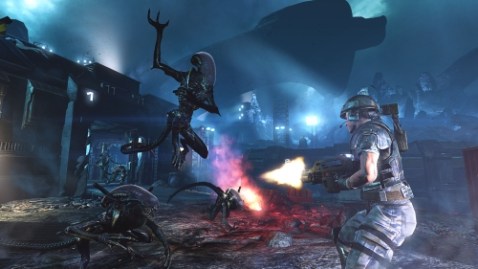
It’s not as satisfying to say you got yourself into this mess by yourself, but it’s probably more accurate.
I’m leery of anyone who pins the blame for their bad games on someone else.
Most games, especially big ones, are not the product of one person’s ego and hard work. That’s asking a lot. A big-budget game is the result of a whole lot of people working together. In an ideal situation, you have the publisher who handles all of the tedious stuff like funding and promoting, directors who have a unified and fun vision for the end product, and programmers who know how to put everything together. Usually, a few of these people wind up being the face of the project, generally the directors and producers.
But then you get bad games. And an awful lot of big-name directors seem to be unwilling to shoulder any of the blame for those games despite taking all of the credit for the games that people love, never mind that both games were equally reliant upon teams. And that makes me leery of directors blaming publishers or studios or anyone else for a game being crap.
 Recent Work
- An error has occurred; the feed is probably down. Try again later.
Chocobo Dash
- An error has occurred; the feed is probably down. Try again later.
 Eliot Lefebvre