Electronic Arts: Not the devil you want

If you’re blaming EA for the fact that you disliked the ending of Mass Effect 3, you should probably take that back down a notch.
I’m just going to go ahead and leave this right here: if you’ve spent a good chunk of your time online screaming about how EA is the worst company in the world, you are why companies think gamers are idiots. Yes, you.
EA, as a whole, is a company you basically can’t have a normal conversation about. It’s one of the biggest publishers in gaming – there’s a reason the company gets its own stage time at E3 when that’s eaten up mostly by the companies producing actual consoles. And the company has a huge stable of studios it owns, game it publishes, and things it sells. Oh, how it will sell things. It was one of the first companies to open up microtransactions in-game, and the company’s history is a long one of doing things that make money, first and foremost.
None of that should be surprising. It’s a company, it’s devoted to making money. But when you talk to gamers online, there’s this image that EA is the literal actual villain of the game industry. Which at best makes gamers look like a batch of petulant, entitled twits, and at worst makes us look like we don’t collectively know what we’re talking about. Usually both at the same time, really.
Leave this out of your game
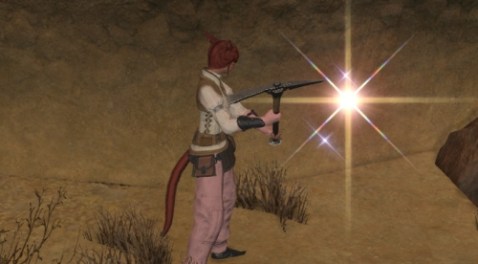
You move sixteen tons, whaddya get? Another day older and I’ve made a lot of gil off the Market Boards.
Guys? We need to have a talk. You’ve been making video games for a really long time now, and I’m not going to pretend you aren’t good at it. I wouldn’t have a job or one of my major hobbies if you were. I like video games!
Please stop making me regret liking video games, though, because you thought that in the middle you would be so clever by including these minigames.
Let’s not mince words. These are not clever additions. At best, what you’re accomplishing here is padding out the length of the game through a horrid minigame that no one would ever want to play. At worst, you’re making Animal Crossing, a franchise of games that is literally nothing but these minigames strung together. Or, if you’d rather, it is every tedious part of every MMO ever, but without the part where after all the tedium you get to stab orcs in the head. So when you’re approving your final design documents and such, if these minigames show up? Send that shit back, because it’s not done yet.
A game like a warm hug

When you were young.
My copy of Secret of Mana is long since dead, and this makes me very unhappy, because it means I don’t have a copy of the game right now. I know, I could buy it on the Wii’s virtual console (although I’d prefer it on the 3DS – Nintendo’s strict limitations on where you can buy older games is kind of absurd), but at the moment I can’t always justify the cost. But that’s not the point. I miss the game and I would play through it again right now, despite having dozens of newer games to play that I’ve never even beaten once.
Is this partly because of the ways that players gravitate toward the familiar over the novel? Naturally. But there’s something more to it. Some games just feel welcoming, even if you’ve played them countless times before, even if the game’s plot is anything but warm and welcoming. There are games that just feel like a big warm hug, welcoming you back no matter how long you’ve been away.
Creating the environment

You threw me into the arena, don’t be surprised that I plan to fight now.
During a conversation the other night with a fellow Final Fantasy XIV player, a statement was made: “It’s not the developers’ fault how players behave.” Which intrigued me, because it’s a sentiment that I see a lot, and one that makes logical sense. It’s also one that’s almost entirely wrong.
Obviously, developers are not coming into your house at night to tell you how the game should be played, or including notes in the instruction manual. Although that would be kind of funny from a perverse standpoint: “press A to jump, but don’t do it in level 3 because that’s not the right way to play.” But the developers are totally telling you how to play, and if you’re breaking the game or playing in a way that’s not fun for you or anyone, that’s entirely the fault of the development team.
It all comes down to the environment you create and what you encourage. Because that’s what tells you how to play the game anyway.
Game companies feel like people

If game companies were more like cats, I think I’d like them more.
It all started when I was thinking about BioWare.
I like BioWare, if you didn’t know. I like them quite a bit. Sure, the studio has made missteps here and there, they’ve goofed up, they haven’t been as good as I know they can be. But the studio is trying. I realized that more than anything, they feel like someone worth knowing. Sure, they’re going to blow it occasionally, but not because they’re bad, just because everyone makes mistakes, and they seem to take their mistakes in stride and move on.
That, of course, led to me thinking about how many other companies feel like people instead of just machines made to take money. Yes, that’s what they are, but if the Supreme Court keeps insisting that corporations are entitled to all of the same benefits as individual people, we might as well start talking about these studios as people, right? It seems only fair.
 Recent Work
- An error has occurred; the feed is probably down. Try again later.
Chocobo Dash
- An error has occurred; the feed is probably down. Try again later.
 Eliot Lefebvre