Demo Driver 8: Pid

Pleasant enough, but is that enough?
If you’re using the word retro to describe your platforming game just because it’s a platformer, that throws up some red flags.
Yes, I totally appreciate the distinction. Platforming as a genre is not nearly as common as it used to be. But just the idea of jumping from platform is not retro in any way, shape, or form. It’s just a mechanic of playing a game. It’s no more retro than first-person shooters or RPGs or anything else. About the only way you can call platforming itself retro is stepping back into the structural portion of platforming, moving away from tricks like seamless levels and narratives and just focusing on precision jumps mixed with power-ups.
Pid is not that game, so the few places where it calls itself “retro” raise my hackles. The fact is that it’s not retro in the least; it would be more accurate to call it an attempt at putting modern design sensibilities into a platforming framework with mild puzzle elements. How well it actually performs this task is another matter, but I give points for the attempt at all.
Telling Stories: Making a guest appearance
 Your character is the protagonist of their own story. If that’s not the case, then go play whoever the protagonist is, because they’re the one with interesting stuff happening. That doesn’t mean your character has to be the super-unique lone heir to some fantastic legacy; it just means that on a list of people who are moving forward in the story, your character should be up there. What’s the point of making your character just an also-ran?
Most people don’t have that problem, though. In fact, most people make characters who have tons of stuff going on, backstory, biographical elements, crazy stuff. Which becomes its own problem when you take into account the fact that if your character wants to get involved with other characters, you want to do so in a way that’s both respectful of the other person’s story and yet still influential. So how do you walk into someone else’s narrative without being either disrespectful or utterly forgettable?
Challenge Accepted: The meat of challenges

When failing with panache becomes harder than succeeding gracelessly.
The most irritating part of playing through Guitar Hero III, for me, were the songs that made it easier to get a Perfect rather than a five-star rating. Since the former relied on you hitting every note while the latter relied on score, there were lower-difficulty songs where the sheer sparsity of notes meant that it was easy to use your star power at the wrong time and wind up without enough points to clear the upper threshold. It made playing a lot more frustrating, because for most of the game the real difficulty was a perfect streak, not getting that star rating.
Back when I discussed difficulty levels, I mentioned that a lot of the stuff used to tweak a game’s difficulty didn’t really alter the fundamental challenge of a game. Sure, you can alter how hard enemies hit and how hard you hit in a lot of games, but that doesn’t necessarily make the game harder. What does make a given game harder or easier than another? That comes down to a series of questions.
The Final Fantasy Project: Final Fantasy IV: The After Years, part 5
Artwork from a sketch by Yoshitaka Amano
It’s the end of the year, and I intend to celebrate with a trip through the tale of the most unpleasant party member from the original Final Fantasy IV! No, not the worst party member from the original game, the most unpleasant one. Which is a spot that has much more competition, since I don’t think anyone seriously contends that Edward was anything other than terrible in the original.
On a more meta note, I will express a touch of regret that the last column for 2014 is of a rather undramatic part of the game’s narrative. Not that I’m not still enjoying The After Years more than I expected to, since it adds a lot of depth to the characters that had previously been lacking. Yes, it’s a rehash of the plot from the last game, which is less than ideal. At the same time, it’s also a better overall game and seems to have a more impressive narrative flow, and the structure is a bit more fun.
Demo Driver 8: Lost Planet: Extreme Condition
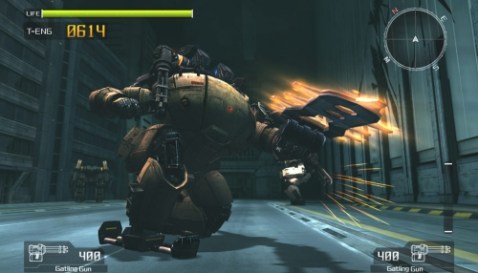
And with this I make it amply clear why I chose to round out the month with this out of all my possible “present” games.
In order to talk about Lost Planet: Extreme Condition, I kind of feel like I have to talk about Red Faction: Armageddon, also known as one of the games I got from the Humble THQ Bundle. More specifically, one of the games I didn’t care about but just got along with the titles I did care about, most of which were well worth the price of admission and the others of which are still sitting and waiting for me to give them their due.
Red Faction: Armageddon is a pretty generic third-person shooter. Its central gimmick barely gets to come into play after the early stages, which is a shame if you enjoy tearing apart structures (and you naturally should). None of its other gimmicks get the space to really explore themselves, leaving you with a coverless shooter that’s never terrible but never quite manages to climb up to excitement either. It’s just a bland progression of shooting setpieces that never vary.
Lost Planet: Extreme Condition is similar in many ways, with a manheap protagonist unable to take cover facing waves of bug-things and masked enemies. The difference, though, is that this one was pretty fun.
 Recent Work
- An error has occurred; the feed is probably down. Try again later.
Chocobo Dash
- An error has occurred; the feed is probably down. Try again later.
 Eliot Lefebvre