The Final Fantasy Project: Final Fantasy IV, part 1
Artwork from a sketch by Yoshitaka Amano
There’s no game in the series that’s had a more tortured path coming over to non-Japanese markets than Final Fantasy III, but Final Fantasy IV certainly deserves a nod, especially as it’s the subject of a lot of rumors and aspersions that simply aren’t true. Everyone knows that it was released as Final Fantasy II originally, that the version released in the US was easier than the one released in Japan four months earlier, that a lot of it was censored… you get the idea. And, unfortunately, even with the ability to clear up a lot of misconceptions now, they persist just the same.
Let’s start at the beginning. Final Fantasy IV started development after Final Fantasy III‘s release simultaneously with Final Fantasy V… sort of. Square was working on two titles for the two Nintendo consoles: Final Fantasy IV for the Famicom, Final Fantasy V for the Super Famicom. Limitations of resources meant that the idea of another Famicom game was scrapped, and instead all of the resources were brought over to the retitled Final Fantasy IV. The Famicom game was apparently about 80% done and some elements were supposedly reused, but it’s never been stated what, exactly, got reused. (I have speculations, but that can come later.)
Demo Driver 8: Blade Kitten (#353)
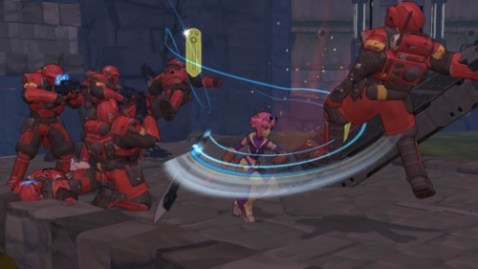
It’s nice when something turns out better than you had any expectations it would be, definitely.
While I like Steam’s integration of Metacritic into its client, sometimes that can sort of send up red flags right away. Blade Kitten‘s aggregate score of 52 certainly didn’t do it any favors. But that’s the most straightforward part here.
Blade Kitten is a side-scrolling platformer based off of a comic… or it’s a platformer that also has a comic… or some combination thereof. I’m not clear on the exact timeline. What I am clear on is that Krome Studios employed the artist as creative director, launched the game with Atari, then got caught up in Atari’s slow-motion self-destruction and had to wait for a long while to get the rights back for the game, which apparently kind of killed the comic, too? There hasn’t been an update there since 2012.
All that backstory aside, the game is now back in the hands of Krome Studios, but with a dismal review score. Is it any good? Does it deserve that score? What did it do to garner such vigorous fans other than having a pink-haired catgirl as the main character? Actually, the last one might answer its own question.
Telling Stories: This is the world we live in

Here’s the funny thing about games: at one point, I realized that my shaman in World of Wacraft was essentially a superhero. She summoned fire, lightning, and wind to do her bidding. She was superhumanly fast, strong, and intelligent. She could walk on water and breathe beneath its surface, shroud herself in deadly electricity, and even speed up herself and her allies faster than the eye could see. Put her in some spandex and give her the same set of powers and no one would bat an eye.
Except, of course, she wasn’t a superhero; she was a shaman. Because that’s the sort of world she lived in.
The fact is that there are a lot of assumptions that go into a genre, and a lot of assumptions about the ways that the world works. You’re aware of them, but you probably don’t know exactly why, for the same reason that you know a shaman isn’t a superhero despite her ability list. Because the world of a fantasy game works differently, even with the exact same abilities. Even in World of Warcraft, it’s a lot more lethal.
The Final Fantasy Project: Final Fantasy’s first generation
Artwork from a sketch by Yoshitaka Amano
You know what I really wish the end of Final Fantasy III signified? That I could move off of my PSP. Sure, I love the system, but I’d really like to be playing these games in a format that allows for proper screenshots. Alas, the rules I’ve laid out keep me on this handheld through Final Fantasy IV and points related, not that things get much better once I move on to Final Fantasy V.
What it actually symbolizes, however, is that I’ve finished up the last game in the franchise that appeared on the NES, or the Famicom if you’d prefer. All three editions are remakes, yes, but the original games started life in the 8-bit era. It’s an interesting element that’s easy to overlook in favor of strict linear progression, but I think it has important implications and information about the franchise as a whole. Yes, in some ways the hardware was just that – hardware, the stuff powerful enough to run these games. But it also has implications for breaking up the flow of the series and how it’s evolved over time.
Hard Project: DOOM
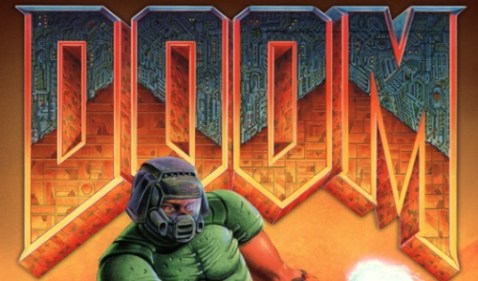
It’s so hardcore it doesn’t even need a description beyond one word.
Calling the original DOOM anything short of a game-changer would be underselling its importance. It was a polished, unique experience, more or less creating the first-person shooter experience in the eyes of many players. It was a shareware title, which made it easy to learn about. It was violent for its time, another feather in the cap of a game that was already laser-guided to reach the hearts of a very definite audience. It was beautiful. It was stunning. It let you blow demons up with a shotgun or carve them up with a chainsaw.
Best of all? It was modifiable by users with minimal effort. Which was pretty important.
In the early days of the Internet, DOOM and its functionally almost-identical sequel, Doom II, were a big deal. Doom 3 – the first actual sequel the game had in a decade – met with positive reviews and it was a success, but it sure as heck wasn’t a success like its predecessors. Heck, it didn’t even match those games in tone, being far more concerned with the idea of sneaking through darkened regions and navigating linear stages. But that’s kind of to be expected. Making Doom 3 was always going to be a difficult proposition, and there’s a reason why the next installment is languishing in development hell. This is a hard project.
 Recent Work
- An error has occurred; the feed is probably down. Try again later.
Chocobo Dash
- An error has occurred; the feed is probably down. Try again later.
 Eliot Lefebvre