Demo Driver 8: Secret of the Magic Crystals
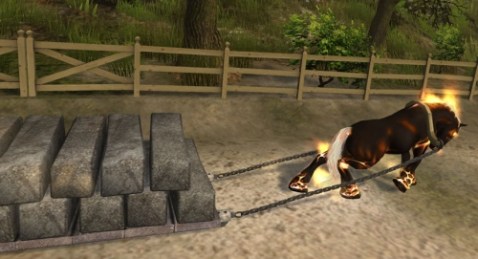
Back in the 90s, I was in a very famous teevee show.
Huh.
One of the weird things about gaming is that there are these shadow genres which exist despite being almost totally ignored by the rest of the population. The Horse Game is one of those genres. There are tons of these games out there, and every single one of them smells like shovelware and, well, horse stables. It’s all about training your horses, breeding them, carefully brushing them, and so forth. And they are legion. These games come out, they keep coming out, and presumably they are in fact making money. How? I don’t know!
I didn’t actually know that Secret of the Magic Crystals would fall into this genre until I clicked the name, but it does indeed. It’s a game about raising not just normal boring horses, but special magical equine creatures like pegasi, unicorns, and if you get particularly lucky 90s sitcom stars. (Not so much, really.) And hey, maybe it was awesome! I knew nothing about this genre, right? Why not give it a shot?
Telling Stories: Why aren’t people getting into this?
 The worst possible thing to feel when you’re lining up roleplaying is to have a big pitch all ready to go, plenty of planning on deck, and when the big day arrives… nobody cares.
It’s true online or in tabletop form. I’ve run tabletop campaigns wherein I had really cool ideas for a plot and characters custom-made by players to fit within those fields, but when push came to shove it turned out that no one was actually on board with the unfolding story. I’ve organized what seemed like really spiffy events to me that turned out just one or two people (which, in this case, was less than I wanted). I’ve been ready to go and gotten sort of left to one side.
So why aren’t people engaging? Why can you have an event or a story ready and then find no one willing to actually engage with what you’re doing? There are lots of reasons, some of which are more common than others, but there are a few questions that can help you at least fix the problem in the future, even if you can’t salvage what’s already gone south.
The Seven Deadly Sins of Game Design
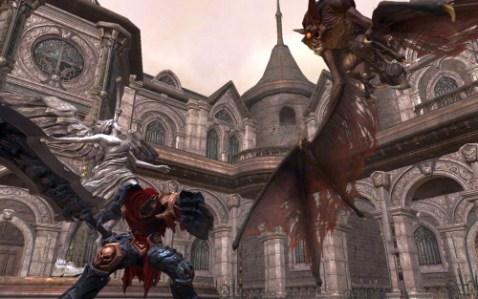
I suppose it’s not really judgement day, but it’s similar.
Woe unto ye, designers, for ye have sinned.
The seven deadly sins in Catholicism are functionally the ur-sins. They aren’t the worst, they’re the roots from which all other sins spring. And I thought it would be edifying to remember that the same concept applies to game design and gameplay, starting from the design side. For there are sins in game design as surely as anything, and some of them are not what you would expect.
Since we’re stressing the idea of the seven deadlies, of course, they should line up to the big ones – greed, envy, sloth, lust, wrath, pride, and gluttony. And I could write for weeks about how those sins are very different from what people usually imagine when they hear those words, like how sloth is less about inaction and more about profound spiritual ambivalence, or how gluttony isn’t just a matter of eating stuff. But that’s really outside the wheelhouse of what is largely a game design blog, isn’t it? So let’s talk about the seven deadly sins of game design.
The Final Fantasy Project: Final Fantasy V, part 2
Artwork from a sketch by Yoshitaka Amano
Once you have access to the jobs, the complexity of Final Fantasy V kind of explodes. Not in a bad way, you’re not being smothered by stuff to do, but the overall change is pretty notable. You have a new swath of jobs to use, and suddenly you have to deal with an aspect of gameplay that has not been an issue in any previous installment of the franchise to date.
Previous installments of the franchise didn’t feature a lot of choice, or at least not much in the same sense of playing around with jobs. Even Final Fantasy III barely cared which job you had been leveling with before; it was all about what you were doing now, after all. Level as something that turned out to be useless and then change? You don’t miss out on much. But here, useless and useful jobs have an impact. Leveling now has an impact on what you’re doing while leveling later. Planning well means negating later grind.
Hard Project: The Matrix

How could this have gone wrong? Oh, wait, all the ways.
The Matrix is one of those things that was a very big deal when it came out and then faded in importance about five minutes later. It’s been a decade since the last film, and the odds of us seeing another one are slim to none. Which is a shame, because it’s still a franchise I like quite a bit, even if I’d like it more if we had gotten the prequel-and-sequel the Wachowskis had originally wanted instead of the single sequel split into two parts.
If you like pretending the two sequels didn’t happen, imagine them as one lean two-hour film and start falling in love again.
We’ve seen three games based on the franchise, with one of them (The Matrix Online) both failing to live up to the promise of that concept and completely failing to deliver on what was originally conceived of in a persistent universe. It kind of makes sense, if you think about it. Even though the movies look great and prompt lots of thoughts vis-a-vis “man, it’d be great to play this as a game,” the whole thing winds up being a really hard project from the word go.
 Recent Work
- An error has occurred; the feed is probably down. Try again later.
Chocobo Dash
- An error has occurred; the feed is probably down. Try again later.
 Eliot Lefebvre