Challenge Accepted: When good trouble goes bad
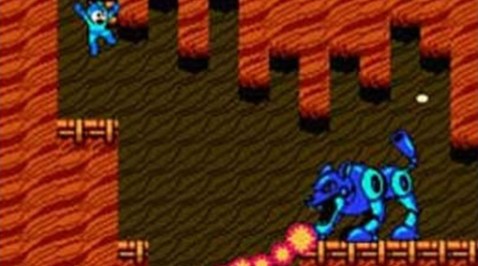
The first time you see these, you understand their attack patterns. The other way around, it would kind of be for crap.
If you’ve played Megaman 2, you know about the disappearing block segments. It starts as a simple jumping puzzle and gets more dangerous as time goes by – blocks fade in, then fade out after a second or two, forcing the player to jump from one vanishing block to the next, a masterpiece of careful timing and understanding the patterns. But the game didn’t stop there. Several of your “weapons” allowed you to make platforms which moved in unique ways. The result was that even though the segment was tricky, if you had too much trouble with it, you could bypass it. You’d have less energy on those tools if you needed them again and had to choose the right tools carefully, but there were other options.
By contrast, when the blocks reappeared in a couple of the more recent games in the Megaman X series, you didn’t have access to those extra abilities. As a result, the challenge became much harder and – really – a lot less fun. You either did it perfectly or you had no alternative. In Megaman 4, meanwhile, the platforming elements in many stages were so easy to bypass you could basically ignore them altogether. They took a good core challenge and wound up making it not nearly as much fun any longer.
Maybe it’s time to stop

If only there were some sort of sign.
One of the nice things about games is that really, there’s nothing that automatically says that the fifth installment of a given franchise is going to be bad. Heck, if a franchise makes it to five installments that’s kind of heartening. You don’t get that many games on the shelf if the first one was a complete train wreck, after all; I might not like the Call of Duty games, but I can at least recognize that they scratched an itch. Sequels for a game franchise can keep going for a very long time.
However, while games don’t suffer from the same issues that you see in movie sequels, you still hit a certain point where the well is dry. If you’re lucky, the series turns into clones of itself; if you’re unlucky, it becomes a shambling undead husk, like the Saw franchise but on your game device of choice. All of these franchises have been around for more than two decades, and they’ve got a lot of goodwill behind them… but it might be time to just give up the ghost and say good night.
Keep the lights on
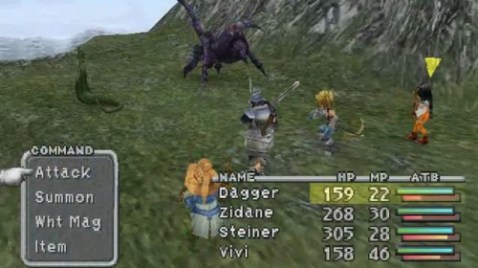
The light of the Crystal, great, but can we talk a little more about the light of the server’s power indicator?
When Final Fantasy IX first released, it had a whole companion website, PlayOnline. The site was an in-depth interactive walkthrough for the entire game, filled with database information, all the stuff you could possibly want from a site devoted to a single game. The site was also designed to work with people who had bought the strategy guide, which tied into parts of the website wherein players could enter codes and see additional tips and tricks about a given area of the game.
That was dumb all by itself. But it makes the owners of the strategy guide look even more silly now, because that walkthrough site is gone. It doesn’t exist any more. The URL is now devoted to Final Fantasy XI, after Square’s grand ideas about that service’s functionality fell through.
You might say that it’s irrelevant, and it certainly is. But it speaks to an issue with a lot of games that were launching around the same time that the century turned, and one of the features that gaming is still struggling to deal with. Everyone knows, of course, that online functionality is important. It’s also not free, and the graveyards are littered with the bones of functions that got torn away.
Challenge Accepted: Being better than you were
Not this kind of growth. This is different.
For the past decade or so, the term “RPG elements” has been thrown around frequently and with such fervor that you could be forgiven for assuming it’s the official brand of ball used by Major League Baseball. Really, what it means is that games have discovered and embraced character growth, the idea that the loser you’re playing in the first level will be able to flick battleships away with a minor hand gesture by the end of the game. Upgrade, improve, level up, get better stuff, leave the worst stuff behind.
Character growth is something that I could honestly spend months talking about, period, as well as discussing how growth ties into rewards (which I have talked about) and the many sorts of growth that are out there (which I haven’t, but I should in the future). But this is a feature all about challenges, and the fact of the matter is that character growth is kind of a bastard for challenges. Because you have to take it into account, and yet at the same time you can’t predict how players are going to use it in the slightest.
Timing your purchase
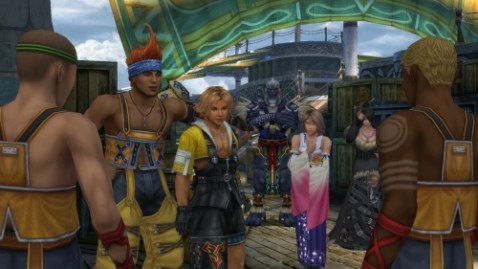
Re-buy these games, only in the exclusive versions that we didn’t give you the option to buy before and that only exist because so many people bought the original version!
Video games are the only product I can think of that make when you buy as important as how you buy. Sometimes even massively so.
In the earliest days, of course, there was no difference whatsoever. You bought the game when it was on the shelves, just like other stuff. Considering the time, you were walking over to the shelves across a field of shag carpeting while proclaiming loudly to everyone in earshot that your current fashion statement wouldn’t make you look like an argument against the concept of clothes in thirty years, but it was 1978. You could hardly be held responsible for that.
Eventually, some bright spark had an idea. I’m going to assume it was a lady named Judy Gamespot. She figured there was no reason not to just sell the games before they came out if you already knew they were coming out. Other industries had been doing it, it was no great stunt to say that you wanted to buy the next issue of X-Men before it was actually out. Why not let consumers do the same with games if you already know they’re coming out?
 Recent Work
- An error has occurred; the feed is probably down. Try again later.
Chocobo Dash
- An error has occurred; the feed is probably down. Try again later.
 Eliot Lefebvre