Why fan translations make me leery

“Well, why did they change anyone’s name?”
Because you can fit names into four characters that you can’t fit into four letters, because that’s how different languages work.
Localization is really, really tricky.
I have played through games that have been localized poorly, don’t get me wrong. The original translation for Final Fantasy Tactics appears to have been made by a group of people for whom neither English nor Japanese was a native language; the same character or place will be referred to by two different names within the same dialogue. I played through all of Lunar: Silver Star Story despite the fact that it was laden with pop culture references that seemed dated ten minutes after launch. And I’m willing to bet good money that some parts of Transistor got mistranslated from whatever divine language the Supergiant folks speak.
But there’s a lot more to localization than just running a quick Google Translate on all of the words and typing out the resulting dialogue. Translation is hard enough on its own, but localization is both necessary to make sure you aren’t vomiting out incoherent word soup and a form of editing by necessity. Because there’s no such thing as a perfect translation of anything from one language to another. Hence why fan translations earn a bit of a raised eyebrow from me.
Hard Project: Cowboy Bebop
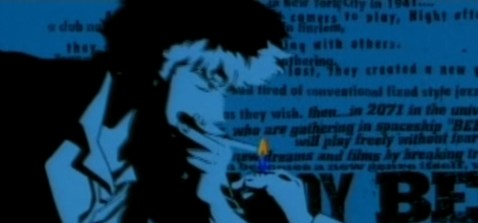
3, 2, 1, let’s jam.
When I find myself looking at anime and wondering if it was always just a series of horrible premises and teenage breasts, Cowboy Bebop is kind of my fallback. If you’ve never seen it, you should go fix that, but you could do worse than boiling it down as Firefly without references to the Civil War and with references to the mob. It’s not much of a leap from the two, is what I’m saying.
There have been two attempts to bring the title into video game format, one of which was an on-rail shooter that was more or less forgotten in the time it took to write this sentence while the other almost had a US release before everyone noticed that it was a terrible game. On the one hand, it’s somewhat refreshing to see a popular anime neither based off of video games nor mired in a series of weak and forgettable game adaptations. But what makes a Cowboy Bebop game so hard to get moving in the first place? Is it all the same problems that stymie a Firefly game?
Nope! It’s a comfortably unique series of problems.
Telling Stories: The tone police
 Just because two people both roleplay doesn’t mean that their roleplaying is compatible.
What I try to do with these columns is give you a picture of how to be a better roleplayer and offer some character-development food for thought. That’s the long and short of it. Best practices, good ideas, verisimilitude, all of that. I very occasionally touch on stories that are pretty played out and hard to take seriously, but the reality is that if you and your friends are comfortable roleplaying half-dragon vampires over in Star Trek Online, more power to you. Enjoy yourselves!
Not everyone is willing to be cool.
Tone policing is essentially the act of going around and telling people how they should be roleplaying based on your personal idea of what characters should be like. It’s imposing your own rules on what someone else is doing. It’s also really shitty behavior that gets sort of glossed over on the flimsy pretext of “but I care about roleplaying” as if that somehow excuses you from making other people’s play experience demonstrably worse.
Sequel ties
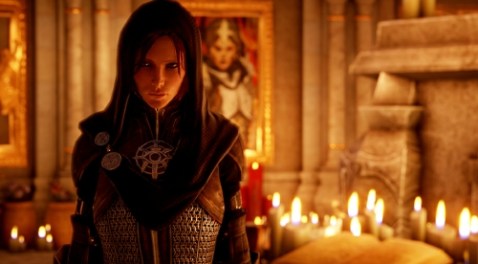
The fact that she could theoretically be dead is apparently something people have a great deal of investment in.
In the earliest days of video games, it was very easy to understand how sequels to a game would work. You had a title, then you had a number after that title. Maybe a subtitle if you were feeling fancy. Once you loaded up that sequel, you were starting back from the same position as someone who had never played the predecessor, because of course you were. That was just how it worked. There’s a reason why early series either had stories that were only loosely connected by theme (Final Fantasy or Ultima, for example), protagonists who had reason not to carry things over from prior titles (Metal Gear), or were produced by companies that don’t care about your stupid continuity (Every Capcom Game Ever).
We are no longer in those earliest days now, though. In order to properly play Dragon Age: Inquisition, I had to log into an external website and recount all of the things I had done during my playthroughs of Dragon Age: Origins and Dragon Age II to ensure that the world was still one I recognized. And that’s worth discussing, because if you think about it that’s both kind of strange and kind of brilliant.
Hard Project: Guitar Hero

I have no regrets about five-starring Through the Fire and the Flames, but I think I was pretty much done afterward.
In 2004, nobody would have predicted that one of the most popular video games would involve standing in front of your television with a fake plastic guitar and pretending to play music. In 2011, the idea seems pretty ridiculous. And yet the Guitar Hero franchise exploded in 2005, enjoyed huge popularity, then violently collapsed and can now be found littering bargain trade-in bins sans guitar. Not that it’s alone in this; the Rock Band franchise dropped in the same timeframe, which for those who don’t remember was the spiritual successor by the same team as the original Guitar Hero.
Fads in gaming are nothing new, but the sheer popularity and the sudden drop-off is worth exploring. It’s an astonishingly quick rise and fall, and it’s not as if the core idea – “pretend to play music” – suddenly became forbidden like whatever the plot was in that Aerosmith video game. But when you think about it, it’s less a matter of surprise that the games didn’t last forever and more a surprise that they were ever a thing at all, because they’re the definition of a hard project.
 Recent Work
- An error has occurred; the feed is probably down. Try again later.
Chocobo Dash
- An error has occurred; the feed is probably down. Try again later.
 Eliot Lefebvre