Telling Stories: Keeping it tense with zero stakes
 I will freely admit that I have seen a decided minority of Doctor Who, but I’m always fascinated by the lengths that the show goes to in order to justify its plots. And kind of with good cause. The Doctor’s TARDIS is basically a get-out-of-plot-free card, able to travel through time and space with an ease usually reserved for making instant popcorn. Many of the conflicts in the show could be solved simply by going back in time to before the antagonist had a certain idea and then throwing him into a locked vault.
I am aware that the Doctor has a rule against killing; that is also a mechanism to avoid having him solve every single problem with infanticide.
Of course, every single story ending like this would make for a terrible series anyway, so I’m not begrudging the existence of these contrivances. The alternative is awful. But it raises an important question about roleplaying, wherein you have no such artificial narrative blocks. You can leave at any time, and you have absolute veto power over what happens to your character. And that’s for good reason, obviously, but it also creates an environment wherein you can always, always leave.
The dark heart of Final Fantasy XI
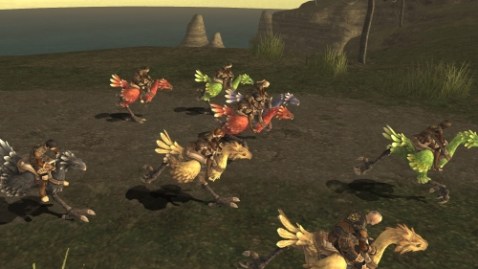
You know it doesn’t want you there, but you can’t help but feel a stirring of nostalgia.
When Final Fantasy XI launched in America, it received a pretty shining reception, which should say a lot about MMOs at the time. This release was a port of a game programmed for a very specific Playstation 2 peripheral, released long enough after its initial launch that a significant portion of the existing Japanese playerbase viewed the incoming American players in much the same way that you would view an army of roaches assembling just outside of your front door. The resultant culture clash and sheer ambiguity of the way the game functioned led to problems that Square-Enix is still pretending to clean up, not to mention that it included PlayOnline, a service so magnificently useless that it makes Games for Windows LIVE seem almost fashionable.
It was problematic, is my point. And that isn’t even getting to the actual game, which I’ve previously said is sort of like some bizarre outgrowth of Stockholm Syndrome, constantly assaulting you for the crime of trying to play it even while you find yourself aware of its deep-seated loathing and contempt for players. And yet the game did well. It was a success. It’s still relatively successful now, more than a decade out from its launch, warts and all.
Like any game, there are lessons to be learned here.
Telling Stories: Going to the chapel, et cetera
Ah, marriage! That binding of kindred spirits, that most loving of all acts, that quick and easy way to cause plenty of drama. And not just via the usual routes of drama where in-character romance throws all sorts of wrinkles at you; that is actually secondary to this particular flavor of dramatic potential.
Unfortunately, most roleplaying weddings really do just treat weddings as the endpoint of a romantic relationship, which is fine as far as it goes. I’ve used it for that purpose, and in real life I am relatively certain my readers here do not want to hear yet again how much I love my wife. (A lot.) Marriage is certainly useful for that.
But there are so many other ways to get drama out of weddings. Many ways which can not even require romantic relationships, or actively work against the in-character relationships you already have. So let’s talk a little bit about how you can make good use of weddings in roleplaying and what marriages can provide for drama.
Challenge Accepted: Breaking out of the challenge box
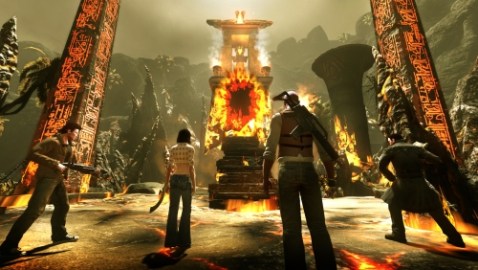
The game is substantially helped by its fair assortment of hellmouths in need of closing despite everything.
Playing The Secret World was in many ways both satisfying and infuriating. On the one hand, here’s an MMO that genuinely wanted its players to be engaged with puzzles beyond simply clicking on the right answer from a short and obvious list. That’s kind of awesome. On the other hand, the actual puzzles it had were highly reliant upon you scanning through fake websites, assembling clues very vaguely hidden in context, and then producing a synthesized answer. Or, as was far more often the case, looking up the solution online and skipping that whole tedious and unenjoyable aspect.
Still, there’s something to be said for the fact that the game did earnestly try to provide a challenge for its players that stretched beyond the norm. It was trying to challenge players beyond the usual sides of gameplay (which ties into that bit I outlined near the start of this feature) or simple common-knowledge trivia, asking players to flex a different skillset. They’re challenges that rely partly on things you’re not usually asked to do and partly upon the fact that you’re taught there’s a certain way video games play.
 Recent Work
- An error has occurred; the feed is probably down. Try again later.
Chocobo Dash
- An error has occurred; the feed is probably down. Try again later.
 Eliot Lefebvre