Telling Stories: Why aren’t people getting into this?
 The worst possible thing to feel when you’re lining up roleplaying is to have a big pitch all ready to go, plenty of planning on deck, and when the big day arrives… nobody cares.
It’s true online or in tabletop form. I’ve run tabletop campaigns wherein I had really cool ideas for a plot and characters custom-made by players to fit within those fields, but when push came to shove it turned out that no one was actually on board with the unfolding story. I’ve organized what seemed like really spiffy events to me that turned out just one or two people (which, in this case, was less than I wanted). I’ve been ready to go and gotten sort of left to one side.
So why aren’t people engaging? Why can you have an event or a story ready and then find no one willing to actually engage with what you’re doing? There are lots of reasons, some of which are more common than others, but there are a few questions that can help you at least fix the problem in the future, even if you can’t salvage what’s already gone south.
The Seven Deadly Sins of Game Design
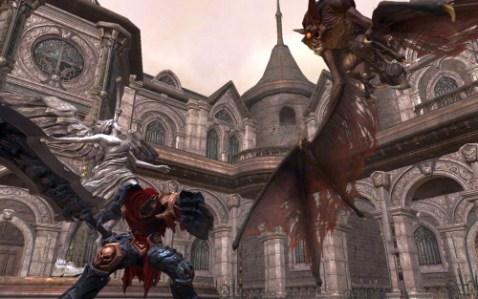
I suppose it’s not really judgement day, but it’s similar.
Woe unto ye, designers, for ye have sinned.
The seven deadly sins in Catholicism are functionally the ur-sins. They aren’t the worst, they’re the roots from which all other sins spring. And I thought it would be edifying to remember that the same concept applies to game design and gameplay, starting from the design side. For there are sins in game design as surely as anything, and some of them are not what you would expect.
Since we’re stressing the idea of the seven deadlies, of course, they should line up to the big ones – greed, envy, sloth, lust, wrath, pride, and gluttony. And I could write for weeks about how those sins are very different from what people usually imagine when they hear those words, like how sloth is less about inaction and more about profound spiritual ambivalence, or how gluttony isn’t just a matter of eating stuff. But that’s really outside the wheelhouse of what is largely a game design blog, isn’t it? So let’s talk about the seven deadly sins of game design.
Telling Stories: Smothering words
The key to communication is brevity. The shortest form of a sentence that conveys all needed information is the best one.
Anyone who has read my words over the majority of my life will know that I am not exactly shy about using plenty of words, obviously, but that doesn’t mean that more words are automatically better. Your choice of words and how many you use contribute to how a piece of text is meant to be read. Something that gets lost very frequently in roleplaying, where players type out lengthy and ornate descriptions of something as simple as picking up a glass.
I don’t care how interesting you’re sure that single act of glass-lifting was, it’s not worth that much time or effort. It’s a glass. You lift it and drink from it. And if you spend too much time typing out how your character does every little thing, you waste a lot of time not being concerned over what your character is actually doing.
Challenge Accepted: Perfect play

You could, in theory, program a Dan AI so perfect that no human player could touch him.
Here’s the problem with AI opponents: when programmed to win, they will win against humans 100% of the time in contests of skill.
I’ve mentioned before that there are four main avenues of challenge in games, but the computer easily bests humans in three of them by definition. A properly programmed opponent who wants to win has better reflexes than you could hope to have, since there are no manual dexterity challenges involved. There’s no problem of managing teammates or of remembering what’s in the game. There isn’t even much space for thought as an avenue of winning; it’s just possible to be smarter than the programmer and find avenues they didn’t consider.
AI opponents in basically every game are not tuned for perfect play, though. Even the hardest opponents need to give players a chance to win, after all. Perfect play is the flipside of having games be a series of decisions with some serving as better decisions than others, the idea of making all of the right decisions and having the dexterity needed to execute those choices properly and reliably. And it’s helpful to consider perfect play in the larger framework of games and challenges, and how much of it is, in fact, contextual.
Telling Stories: The space between “can” and “should”
Let me make two points that are so self-evident they should be entirely unnecessary, and yet they come up time and again. The first is one that has been discussed to death: You can make any sort of character for roleplaying that you want. The second is equally obvious: There are a lot of things you should and should not do when making a character.
These are not contradictions.
It can be hard, at times, to separate the two. But the entire purpose of this column, and the one I did before this, and any subsequent columns on the same topic I do after this is talking about what you should do. A column talking about what you can do with roleplaying would be extremely short and boring, consisting of exactly one entry (“you can do what you want”) and offering no useful advice. But among all the things you can do, there are a lot of things you should or should not do, and just because something is in fact possible does not make it a good idea.
 Recent Work
- An error has occurred; the feed is probably down. Try again later.
Chocobo Dash
- An error has occurred; the feed is probably down. Try again later.
 Eliot Lefebvre