Killing the six-fingered man
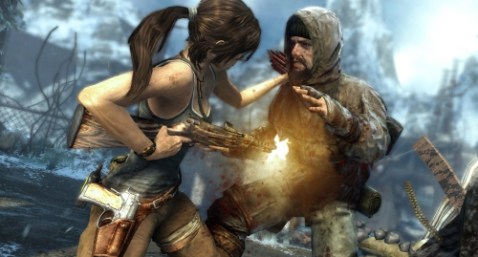
They are not what you’re afraid of. But they’ll do.
My favorite story about The Princess Bride is Mandy Patinkin talking about Inigo’s moment of triumph. Because I’ve totally been there.
Patinkin’s story, in brief, is that his father had recently died after a long struggle with cancer. There isn’t a whole hell of a lot you can do in a situation like that, obviously; you love your family member and try to give them strength until the end. But when he was filming Inigo’s confrontation with Rugen, suddenly he didn’t have an abstract concept to wrestle with. Here he was, in character, taking out the man responsible for killing his father. He’s said that it was a little bit like being able to avenge his father.
I know how that feels. Sure, I lost my father to alcoholism, not cancer, and I wasn’t in a movie that allowed me to externalize all of that. But I had my video games, and in places, that was enough. Hell, that’s half of the point of video games, to deal with problems that never get a truly satisfying conclusion any other way.
Hard Project: MMOs

Create a world. Live there forever.
You know, it’s a brand new year. And it can’t go worse than last year did for the genre that I sort of get paid to write about, because 2014 was a wash in terms of new releases. Every single big title that released in 2014 managed to screw things up something awful, and when you factor in Blizzard cancelling a title that realistically was never coming out anyway and didn’t have any impact on the industry unless you’re watching it like a hawk and speculating, you have plenty of people calling the industry dead.
It’s an absurd statement. The one bit of traction it gets, though, is that making an MMO is hard. Very hard. No matter how certain the IP you have to work with, no matter how much money you can throw at the project, no matter how experienced the developers are. MMOs, to a one, are hard projects. When you take things like a significant budget or experienced developers out of the equation, the project just gets harder, but it’s sort of a minor miracle that the dozens actually on the market actually exist, much less that they work so well.
Telling Stories: Making a guest appearance
 Your character is the protagonist of their own story. If that’s not the case, then go play whoever the protagonist is, because they’re the one with interesting stuff happening. That doesn’t mean your character has to be the super-unique lone heir to some fantastic legacy; it just means that on a list of people who are moving forward in the story, your character should be up there. What’s the point of making your character just an also-ran?
Most people don’t have that problem, though. In fact, most people make characters who have tons of stuff going on, backstory, biographical elements, crazy stuff. Which becomes its own problem when you take into account the fact that if your character wants to get involved with other characters, you want to do so in a way that’s both respectful of the other person’s story and yet still influential. So how do you walk into someone else’s narrative without being either disrespectful or utterly forgettable?
Challenge Accepted: The meat of challenges

When failing with panache becomes harder than succeeding gracelessly.
The most irritating part of playing through Guitar Hero III, for me, were the songs that made it easier to get a Perfect rather than a five-star rating. Since the former relied on you hitting every note while the latter relied on score, there were lower-difficulty songs where the sheer sparsity of notes meant that it was easy to use your star power at the wrong time and wind up without enough points to clear the upper threshold. It made playing a lot more frustrating, because for most of the game the real difficulty was a perfect streak, not getting that star rating.
Back when I discussed difficulty levels, I mentioned that a lot of the stuff used to tweak a game’s difficulty didn’t really alter the fundamental challenge of a game. Sure, you can alter how hard enemies hit and how hard you hit in a lot of games, but that doesn’t necessarily make the game harder. What does make a given game harder or easier than another? That comes down to a series of questions.
Telling Stories: No repeats
There are times and places where repeats are perfectly fine. A lot of radio stations in Connecticut seem to advertise “no repeats” as a badge of honor, which is slightly less than heartening when you realize that these stations have perhaps ten worthwhile songs in their rotations. Nor do I expect most television shows to provide me with a constant drip of new entertainment year-round. Heck, half of my knowledge of Law & Order comes from catching enough out-of-order repeats that I eventually began to piece together a coherent whole.
Roleplaying is not a medium which is kind to repeats, however. I would go so far as to say that repeats are actively detrimental to roleplaying for a number of reasons. They’re tempting, at times, but in a medium which relies upon your ability to craft an entertaining story with other people, handing over a story people have already seen just feels like going through the motions for no real benefit.
 Recent Work
- An error has occurred; the feed is probably down. Try again later.
Chocobo Dash
- An error has occurred; the feed is probably down. Try again later.
 Eliot Lefebvre