The Final Fantasy Project: Final Fantasy IV: The After Years, part 5

Artwork from a sketch by Yoshitaka Amano
It’s the end of the year, and I intend to celebrate with a trip through the tale of the most unpleasant party member from the original Final Fantasy IV! No, not the worst party member from the original game, the most unpleasant one. Which is a spot that has much more competition, since I don’t think anyone seriously contends that Edward was anything other than terrible in the original.
On a more meta note, I will express a touch of regret that the last column for 2014 is of a rather undramatic part of the game’s narrative. Not that I’m not still enjoying The After Years more than I expected to, since it adds a lot of depth to the characters that had previously been lacking. Yes, it’s a rehash of the plot from the last game, which is less than ideal. At the same time, it’s also a better overall game and seems to have a more impressive narrative flow, and the structure is a bit more fun.
Demo Driver 8: Lost Planet: Extreme Condition
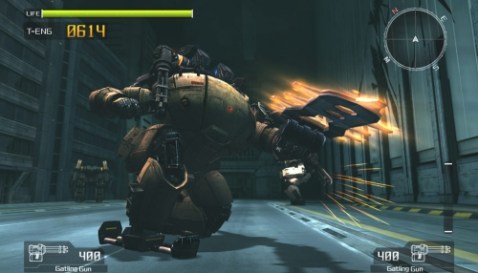
And with this I make it amply clear why I chose to round out the month with this out of all my possible “present” games.
In order to talk about Lost Planet: Extreme Condition, I kind of feel like I have to talk about Red Faction: Armageddon, also known as one of the games I got from the Humble THQ Bundle. More specifically, one of the games I didn’t care about but just got along with the titles I did care about, most of which were well worth the price of admission and the others of which are still sitting and waiting for me to give them their due.
Red Faction: Armageddon is a pretty generic third-person shooter. Its central gimmick barely gets to come into play after the early stages, which is a shame if you enjoy tearing apart structures (and you naturally should). None of its other gimmicks get the space to really explore themselves, leaving you with a coverless shooter that’s never terrible but never quite manages to climb up to excitement either. It’s just a bland progression of shooting setpieces that never vary.
Lost Planet: Extreme Condition is similar in many ways, with a manheap protagonist unable to take cover facing waves of bug-things and masked enemies. The difference, though, is that this one was pretty fun.
Games for Christmas!

This game doesn’t really have anything to do with Christmas, but I did get it for Christmas one year, which seems apropos as I continue falling in love with its second sequel.
Everyone likes getting video games for Christmas. Probably. I’m sure there are some people not really down with the idea, like your cousin who lost an arm in the Console Wars make in ’93, but everyone else likes getting them. But pretty much all of them are kind of inappropriate for the season. How can you appropriately connect your real life to your love of video games in these conditions?
Sure, you could just accept that not every holiday has a game that corresponds nicely with its setting, but that seems like quitting talk to me.
The fact is that very few games actually do focus around the yuletide season, which proves once again that Halloween is the superior holiday, but there are games wherein you can get your Christmas fix. Leaving aside MMOs that are commercially obligated to feature some sort of Christmas celebration so you can hide from your family while still getting presents, let’s take a look at offline offerings to get in your Christmas fun.
The Final Fantasy Project: Final Fantasy IV: The After Years, part 4
Artwork from a sketch by Yoshitaka Amano
There’s no place like home for the holidays, with the acceptable caveat that “home” can mean a variety of things other than “at the home of your parents.” Sometimes your parents are pretty toxic people to be around. Which, not coincidentally, is the subject of this next installment in Final Fantasy IV: The After Years. Or at least it’s related. They occupy similar headspaces. Look, doing segues on December 24th is difficult, especially when you’re working very far ahead.
One of the things that I do wish was a bit more common in these little vignettes was more character study work. They’re quick and inconsequential, which is part of the point, and that’s all well and good. At the same time, it’d be nice to get inside the characters’ heads a little bit more. Most of the plot sequences are entirely given over to advancing the plot at a whipcrack pace, and the characters are all hurtling toward their destinations with little chance to bounce off of more than one or two other people. Sort of a missed opportunity.
Demo Driver 8: Gunpoint
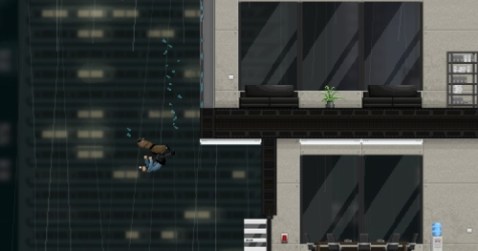
The Real Folk Blues.
Gunpoint is probably closer to a stealth game than a puzzle game, because it reminds me a lot of Mark of the Ninja. Despite the fact that it really doesn’t play like Mark of the Ninja at all.
According to its store page, Gunpoint is a stealth puzzler, but the emphasis is more on the former than the latter. I say this because stealth games are by definition puzzle games; you’re trying to figure out how to get from point A to point B without being caught, shot, or otherwise stopped. What makes for a particularly good stealth game is when the game gives you various tools to accomplish those central objectives, allowing you to go through the stages however you want.
It’s rare for a game to explicitly give you more puzzle-like control over the stage configuration, though, which makes up Gunpoint‘s central gimmick. And it’s a gimmick that works well, no more or less realistic than Watch_Dogs allowing you to hack everything with bizarre results but far more subtle and well-paced in how it plays out. Like Mark of the Ninja, you are a predator in the shadows, but instead of lurking in corners and executing elegant maneuvers, you’re a ghost in the machine.
 Recent Work
- An error has occurred; the feed is probably down. Try again later.
Chocobo Dash
- An error has occurred; the feed is probably down. Try again later.
 Eliot Lefebvre