Frozen and the art of unlearning

If you don’t like it, I’m not going to convince you otherwise, but I question your decisions.
I was born as a child of winter, in the midst of a blizzard. I feel it down to my bones, feel rime creep in around the corner of my eyes when I close them, feel my skin exult at the biting air that blows in when October starts to die and make way for November. When snow falls, I smile. The cold really never did bother me anyway.
That is not why I feel a connection to Frozen. But it certainly makes the film’s chill landscape feel that much more welcoming. A kingdom of ice and frost looks less like a lonely wasteland and more like a comfortable place to be, if not forever then at least for a time.
But the connection goes deeper than that, and it ties into the fact that both of the main characters in the film have such a profoundly personal journey that you kind of half to check yourself on occasion to remind you that is, at its heart, a film for children. The themes of the movie are a lot deeper than you’d expect, and for me – for a lot of people – this is a story detailing the same journey that adult life has already put us through, but with a great deal more compassion and acceptance than you’d think possible.
Spoiled on Star Trek
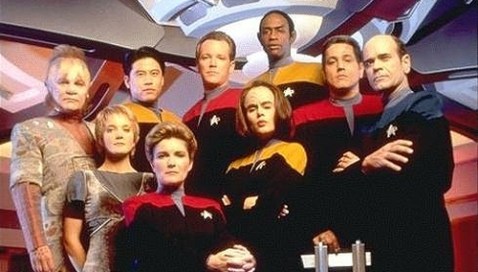
If I had to guess “what series would end off the run chronologically” I really would not have guessed Voyager.
I’ve been thinking a lot about Star Trek lately. All right, that’s not fair; I’m frequently thinking about Star Trek. But I’ve been thinking about it more than usual. About the backlash against the new films, backlash that in many cases seems to amount to lashing out against these films because they’re so different from the original takes, rather than being upset at some legitimate flaws in the structure.
Seriously, there are loads of reasons to dislike Star Trek Into Darkness, but none of them have to do with the fact that it’s not Star Trek enough.
But there’s more going on here, and as I watch through Voyager I’m struck by something I’ve always been aware of but never really thought about. For a really long time, Star Trek had a very steady pattern going, and the new films represent the same sort of paradigm shift that The Next Generation introduced. We, as fans, shouldn’t be all too unhappy with the new films, even if we don’t like them – because this has happened before, and to be honest, we’re kind of at fault here.
No, I don’t like Star Wars
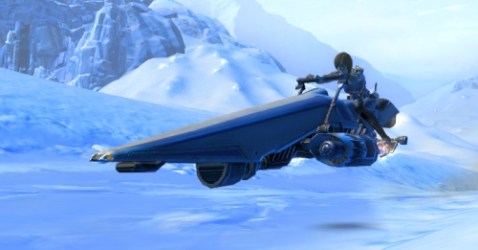
It’s Hoth. It’s always Hoth. Because it was in the movies, and how can we possibly avoid referencing the movies over and over? So let’s slowly erode the idea that Hoth was this frozen backwater in the middle of nowhere and just keep going back to Hoth. (And somehow it’s still doing better in this regard than Tatooine.)
One of those things that always sticks in my craw is the result when I mention around people I don’t know that I don’t like Star Wars. Because someone always doesn’t believe me.
There’s a little twitch in the eye, a stare, an odd expression. “Really?” they ask. “Not even such-and-such? Does that mean you don’t like this or that?” It’s a request for elaboration, like there has to be some caveat, it can’t be as simple as just the fact that I would be much happier to live in a world where there would be no more Star Wars.
What I do like that intersects with Star Wars is a very thin list that I generally enjoy in spite of its association, not as a result of it. I would much prefer if Star Wars: The Old Republic was based on literally any other property in the world. I have to consciously distance myself from the name when I attempt to enjoy the original trilogy. I don’t like Star Wars, and I think there’s a lot of good reason not to like Star Wars.
 Recent Work
- An error has occurred; the feed is probably down. Try again later.
Chocobo Dash
- An error has occurred; the feed is probably down. Try again later.
 Eliot Lefebvre