Demo Driver 8: Pid

Pleasant enough, but is that enough?
If you’re using the word retro to describe your platforming game just because it’s a platformer, that throws up some red flags.
Yes, I totally appreciate the distinction. Platforming as a genre is not nearly as common as it used to be. But just the idea of jumping from platform is not retro in any way, shape, or form. It’s just a mechanic of playing a game. It’s no more retro than first-person shooters or RPGs or anything else. About the only way you can call platforming itself retro is stepping back into the structural portion of platforming, moving away from tricks like seamless levels and narratives and just focusing on precision jumps mixed with power-ups.
Pid is not that game, so the few places where it calls itself “retro” raise my hackles. The fact is that it’s not retro in the least; it would be more accurate to call it an attempt at putting modern design sensibilities into a platforming framework with mild puzzle elements. How well it actually performs this task is another matter, but I give points for the attempt at all.
Telling Stories: Making a guest appearance
 Your character is the protagonist of their own story. If that’s not the case, then go play whoever the protagonist is, because they’re the one with interesting stuff happening. That doesn’t mean your character has to be the super-unique lone heir to some fantastic legacy; it just means that on a list of people who are moving forward in the story, your character should be up there. What’s the point of making your character just an also-ran?
Most people don’t have that problem, though. In fact, most people make characters who have tons of stuff going on, backstory, biographical elements, crazy stuff. Which becomes its own problem when you take into account the fact that if your character wants to get involved with other characters, you want to do so in a way that’s both respectful of the other person’s story and yet still influential. So how do you walk into someone else’s narrative without being either disrespectful or utterly forgettable?
The Final Fantasy Project: Final Fantasy IV: The After Years, part 5
Artwork from a sketch by Yoshitaka Amano
It’s the end of the year, and I intend to celebrate with a trip through the tale of the most unpleasant party member from the original Final Fantasy IV! No, not the worst party member from the original game, the most unpleasant one. Which is a spot that has much more competition, since I don’t think anyone seriously contends that Edward was anything other than terrible in the original.
On a more meta note, I will express a touch of regret that the last column for 2014 is of a rather undramatic part of the game’s narrative. Not that I’m not still enjoying The After Years more than I expected to, since it adds a lot of depth to the characters that had previously been lacking. Yes, it’s a rehash of the plot from the last game, which is less than ideal. At the same time, it’s also a better overall game and seems to have a more impressive narrative flow, and the structure is a bit more fun.
The tiers of remakes
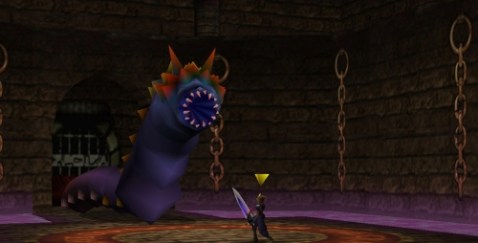
Do the same thing over again, only different and better.
Remake. The term strikes fear into the hearts of all, because you know you’re in for a ride as soon as you hear it, and it might not be a good one. Someone has decided that your favorite movie or game or show needs to be recreated completely, because for whatever reason the original just isn’t good enough any more.
To be utterly fair, if you’re looking at your favorite stuff with a critical eye, this is frequently accurate. Your favorite stuff is not sacrosanct, and there are times when it completely deserves a redo to be more accessible or just plain better. My affection for older games does not render them immune to the ravages of technology, and bringing them up to date both graphically and mechanically could do wonders for several. I’d love to see the original Phantasy Star games brought together into a fully remade form, for example.
Yet for every great remake in any medium, there are some truly atrocious ones. So let’s look at what can be done with remakes, the tiers that can be aspired to, from the worst to the best.
The Final Fantasy Project: Final Fantasy IV: The After Years, part 4
Artwork from a sketch by Yoshitaka Amano
There’s no place like home for the holidays, with the acceptable caveat that “home” can mean a variety of things other than “at the home of your parents.” Sometimes your parents are pretty toxic people to be around. Which, not coincidentally, is the subject of this next installment in Final Fantasy IV: The After Years. Or at least it’s related. They occupy similar headspaces. Look, doing segues on December 24th is difficult, especially when you’re working very far ahead.
One of the things that I do wish was a bit more common in these little vignettes was more character study work. They’re quick and inconsequential, which is part of the point, and that’s all well and good. At the same time, it’d be nice to get inside the characters’ heads a little bit more. Most of the plot sequences are entirely given over to advancing the plot at a whipcrack pace, and the characters are all hurtling toward their destinations with little chance to bounce off of more than one or two other people. Sort of a missed opportunity.
 Recent Work
- An error has occurred; the feed is probably down. Try again later.
Chocobo Dash
- An error has occurred; the feed is probably down. Try again later.
 Eliot Lefebvre