The Final Fantasy Project: Final Fantasy IV: The After Years, part 12
Artwork from a sketch by Yoshitaka Amano
I am not sure how to classify the ending sequence of The After Years, I’m really not. Because on the one hand, the game basically decided to just throw everything to the wind and fling the entire group into nothing more than a huge, lingering dungeon crawl to cap off the game. That’s sort of the height of laziness. On the other hand, it’s the first time in all of this installment that we actually get some choice and control over the characters, even if it’s just insofar as setting up the party.
Final Fantasy IV is the only game in the franchise that really took that option out of player hands in the first place, I’ll note, but that’s a different discussion.
Regardless of that, it is what it is, and we have all of the team members assembled in the Lunar Whale as we speed off to the final confrontation. Which seems like a long time for us, the players, because getting to this point has easily taken 40 hours. For the characters this is happening over the span of a couple days. Bit of a difference in scale.
Hard Project: Cowboy Bebop
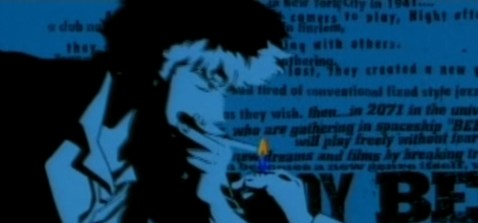
3, 2, 1, let’s jam.
When I find myself looking at anime and wondering if it was always just a series of horrible premises and teenage breasts, Cowboy Bebop is kind of my fallback. If you’ve never seen it, you should go fix that, but you could do worse than boiling it down as Firefly without references to the Civil War and with references to the mob. It’s not much of a leap from the two, is what I’m saying.
There have been two attempts to bring the title into video game format, one of which was an on-rail shooter that was more or less forgotten in the time it took to write this sentence while the other almost had a US release before everyone noticed that it was a terrible game. On the one hand, it’s somewhat refreshing to see a popular anime neither based off of video games nor mired in a series of weak and forgettable game adaptations. But what makes a Cowboy Bebop game so hard to get moving in the first place? Is it all the same problems that stymie a Firefly game?
Nope! It’s a comfortably unique series of problems.
Demo Driver 8: Croixleur Sigma
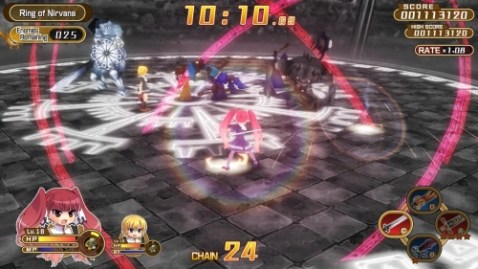
If you’re expecting a personality beyond “girl one” and “girl two” you will be sadly disappointed.
Remember how I said two weeks ago that if you put out a demo for your game, it should include a tutorial? Apparently that advice was taken to heart by the makers of Croixleur Sigma in the worst possible way. Because they included one that is entirely non-interactive, thus invalidating the benefit of having a tutorial by preventing you from putting your hands on the controls and actually feeling how the game controls. Then again, considering the game was already going out of its way to make sure it didn’t actually recognize my gamepad mappings, perhaps that’s a… understandable thing?
Croixleur Sigma is one of the various Japanese indie games that’s popped up on Steam, and like so many of them it’s kind of a thin offering. By no means is it one of the worst games I’ve played here, but it manages to commit the worst of all sins. Not by failing to last 15 minutes (although it does that, too), but by making slashing my way through a whole pile of monsters feel boring.
Telling Stories: The tone police
 Just because two people both roleplay doesn’t mean that their roleplaying is compatible.
What I try to do with these columns is give you a picture of how to be a better roleplayer and offer some character-development food for thought. That’s the long and short of it. Best practices, good ideas, verisimilitude, all of that. I very occasionally touch on stories that are pretty played out and hard to take seriously, but the reality is that if you and your friends are comfortable roleplaying half-dragon vampires over in Star Trek Online, more power to you. Enjoy yourselves!
Not everyone is willing to be cool.
Tone policing is essentially the act of going around and telling people how they should be roleplaying based on your personal idea of what characters should be like. It’s imposing your own rules on what someone else is doing. It’s also really shitty behavior that gets sort of glossed over on the flimsy pretext of “but I care about roleplaying” as if that somehow excuses you from making other people’s play experience demonstrably worse.
The Final Fantasy Project: Final Fantasy IV: The After Years, part 11
Artwork from a sketch by Yoshitaka Amano
My impression of The After Years has been kind of mixed, but I don’t think you can really talk about the game thus far without pointing out that it is, in fact, nine smaller games. At this point, the actual events have all taken place over a very short span of time, and the characters in these stories haven’t done a whole hell of a lot, especially due to the fact that there’s no space for upward motion. Ursula and Yang get two hours of development, awesome, but they don’t show up in any significant fashion in the prior or later tales.
In short, the whole thing doesn’t feel like a cohesive whole at this point, just a series of vignettes that are trying to link together in a vague fashion. But this is the point when everything does link up and all of the characters come together. After lots of hints and little pieces of the whole picture, the last chapters start up, and they reveal what’s going on, why we’ve had all these thin rehashes of old bosses and encounters, and what it’s all supposed to mean.
So it’s time for the whole thing to start feeling like a Final Fantasy title.
 Recent Work
- An error has occurred; the feed is probably down. Try again later.
Chocobo Dash
- An error has occurred; the feed is probably down. Try again later.
 Eliot Lefebvre