Uniquely game-based horror
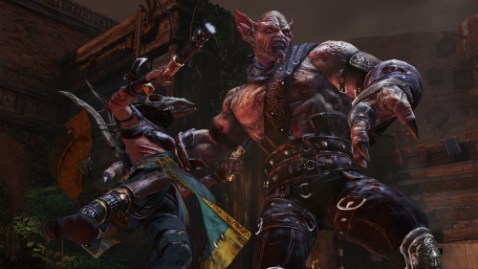
No, I’m not quite talking about the horror inherent in realizing that this is probably both the revival and the end of the Legacy of Kain franchise.
Video games have a lot of potential for horror that I don’t think we’re tapping into. I’m not just talking about transparent crap like marketing games with zombies as “survival horror” so much as obvious avenues of game design that just don’t get tapped. And part of that is preying upon the sorts of horror that don’t exist outside of video games.
Unlike most forms of horror, video games have a requirement for audience participation. You don’t watch games, you play them. There are certain tricks that implies which just can’t be pulled off when you have an entire audience sitting and watching. There are ways to make games feel more horrifying that really lean on the fact that these are games, that players are playing them, that you can hit a sense of powerlessness for the players at a more primal level. There’s stuff that’s scary without requiring big claws or teeth or any combination thereof.
So let’s talk scary, and let’s see how games can really screw with the heads of players with some simple (and kind of horrible) tricks.
The Final Fantasy Project: Final Fantasy IV, part 8

Artwork from a sketch by Yoshitaka Amano
The road to the Tower of Babil is a long one. Part of that is because it is not, strictly speaking, a road; it’s a layer of solid rock over rivers of magma. Another part of that is that it is not a tourist destination. Much as I like the idea of dwarven groups riding little dwarven tour buses back and forth, sending postcards that read “LALI-HO FROM THE TOWER OF BABIL,” that’s not what happens.
I keep getting my hopes up, but it’s time to face fact.
After a fairly long trek, the dwarven tanks are finally visible, opening fire on the tower as a distraction tactic. That’s enough distraction for the group to slip in on the bottom floor, rushing toward the obviously advanced facility suspended over a river of lava. The casual presence of technology feels a bit disconnected, but it’s also an interesting echo of the endgame portions of Final Fantasy I, a world far bigger than the pseudo-medieval setting that has seemed fairly stable up until now.
Hard Project: Zombies

Ironically, this genre seems almost impossible to actually kill.
I love zombie fiction. I absolutely hate most video games that feature zombies. And there’s a good reason for that, largely stemming from the fact that the two bear only the slightest connection to one another.
Let it not be said that you do not have your options for zombie games if you want them. The Walking Dead has been doing quite well for itself. DayZ is out in early testing that only asks you to, you know, purchase it before you can test it. (That seems backwards to me, but that’s a different article.) Dead Rising is a thing, State of Decay is a thing, Left 4 Dead is a thing, and hell, Plants vs. Zombies is out there. That’s not even counting the numerous games which feature zombies as a sideline – arguably the Husks of Mass Effect are close cousins.
But I don’t really like zombie games all that much, and even the games that I’m listing don’t seem to really like zombies all that much. Which is why I’m listing this as a hard project, because it turns out that making a zombie game is a very different prospect from writing zombie horror, and the two don’t go together nicely.
Demo Driver 8: Tobe’s Vertical Adventure
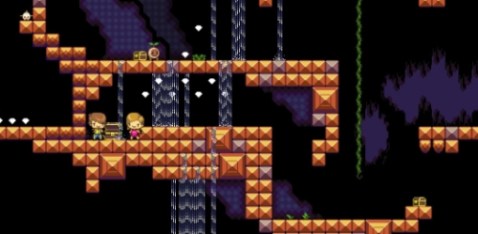
Nostalgia coupled with nostalgia married to solid mechanics leaves evaluations in a complicated place.
I may be alone in this regard, and by “may be” I mean “certainly appear to be,” but I am entirely done with the current waves of misguided affection for the arcade games and early 16-bit games that I had in my youth.
This is not to say that the indie love affair with old-school games is an inherent hindrance any more than the triple-A fascination with fabric simulation is an inherent hindrance; it’s more that both tend to produce a lot of stuff that starts with a bedrock of nostalgia and never quite gets around to assembling compelling gameplay to support it. Instead, there are games – which you can probably guess include today’s offering – which are perfectly serviceable homages without adding much on besides.
Fortunately for Tobe’s Vertical Adventure, the game is more aiming at a feel than a particular game or style, which covers a multitude of sins. It’s not a bad game, either, but it certainly feels like the homage cam first and the actual gameplay showed up late to the party without appropriate clothing. So it manages all right, but it never quite manages to pass that threshold of being good enough that there’s no reason to care about visuals.
Telling Stories: What you don’t see when looking in the mirror

If I had to point to why I enjoyed Star Trek: Deep Space Nine so much, I could do worse than pointing to the episode of “Waltz.” In some ways, it’s very much a bottle show – the captain of the series and the character who’s been long set up as a villain facing off against one another and simply letting drama develop. But I particularly love the amount of insight it gives into that villain, a look into the mind of Dukat. We have a character who is sharply analytical and has looked deep within himself to figure out his flaws, only to come up with a conclusion so far from redemption that his subsequent actions are at once deplorable and expected.
And it also gives chilling mirrors of any time that the viewers tried to self-analyze.
The thing about introspection is that it’s tricky to do properly, because as the audience and the author we have a different perspective. We can see what characters are doing wrong when the characters themselves often can’t. So that raises the interesting question of how much introspection is too much and how to put yourself in the right place to see what they would see.
 Recent Work
- An error has occurred; the feed is probably down. Try again later.
Chocobo Dash
- An error has occurred; the feed is probably down. Try again later.
 Eliot Lefebvre