Challenge Accepted: Meta challenges
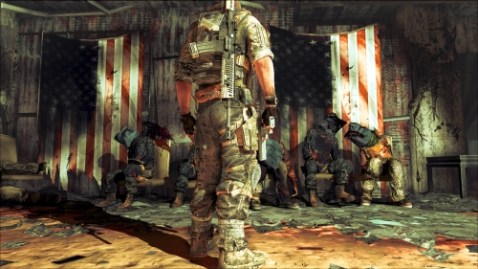
I just can’t stand being told I’m a horrible person too many times in a single day.
As long as we’re talking about challenge, we have to also talk about the things which create more challenge that aren’t a function of any part of game design. They’re not elements of poor design, they’re not fake difficulty, they don’t fall under the header of things that appear to be challenges but really aren’t. Yet they’re still challenging, and they can still knock you flat on your rear just as surely as a genuinely challenging bit of content will.
This is a collection of what I call meta challenges, challenges that are very much there but also have little to nothing to do with the actual challenge level of the game. None of them are coded into the game, but all of them are elements that make playthroughs more difficult, often stalling players entirely despite the fact that they’re obviously not a part of the core experience. Some of them brush up against fake difficulty in a few places, but all of them are still distinct from it by not providing a challenge to every player, just some players.
Challenge Accepted: When good trouble goes bad
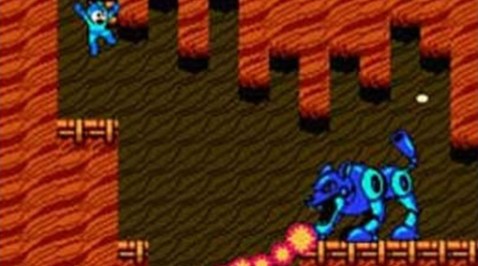
The first time you see these, you understand their attack patterns. The other way around, it would kind of be for crap.
If you’ve played Megaman 2, you know about the disappearing block segments. It starts as a simple jumping puzzle and gets more dangerous as time goes by – blocks fade in, then fade out after a second or two, forcing the player to jump from one vanishing block to the next, a masterpiece of careful timing and understanding the patterns. But the game didn’t stop there. Several of your “weapons” allowed you to make platforms which moved in unique ways. The result was that even though the segment was tricky, if you had too much trouble with it, you could bypass it. You’d have less energy on those tools if you needed them again and had to choose the right tools carefully, but there were other options.
By contrast, when the blocks reappeared in a couple of the more recent games in the Megaman X series, you didn’t have access to those extra abilities. As a result, the challenge became much harder and – really – a lot less fun. You either did it perfectly or you had no alternative. In Megaman 4, meanwhile, the platforming elements in many stages were so easy to bypass you could basically ignore them altogether. They took a good core challenge and wound up making it not nearly as much fun any longer.
Challenge Accepted: Being better than you were
Not this kind of growth. This is different.
For the past decade or so, the term “RPG elements” has been thrown around frequently and with such fervor that you could be forgiven for assuming it’s the official brand of ball used by Major League Baseball. Really, what it means is that games have discovered and embraced character growth, the idea that the loser you’re playing in the first level will be able to flick battleships away with a minor hand gesture by the end of the game. Upgrade, improve, level up, get better stuff, leave the worst stuff behind.
Character growth is something that I could honestly spend months talking about, period, as well as discussing how growth ties into rewards (which I have talked about) and the many sorts of growth that are out there (which I haven’t, but I should in the future). But this is a feature all about challenges, and the fact of the matter is that character growth is kind of a bastard for challenges. Because you have to take it into account, and yet at the same time you can’t predict how players are going to use it in the slightest.
Challenge Accepted: Select difficulty

This is not the vacation I had been expecting.
A curious thing happened on one of my playthroughs of Zone of the Enders: The 2nd Runner. I realized that the difficulty I had things set on was actually making my life harder, despite the fact that it was down at Easy.
I’d beaten the game before, and this was just meant as a fun run using the relentlessly overpowered final form that can then be used to play through the game. What made things difficult is that there’s a boss where your goal is to parry her attacks, then grab her machine and delete a virus that’s manipulating her controls. Hack at her actual mech too many times and it’s game over. Between the difficulty setting and my machine, every time I would accidentally hit her instead of parrying her attack, she’d lose a good third of her health – compared to a normal playthrough, where a few misses were unfortunate, but you had to be really trying to kill her.
This was an isolated incident, but it also serves as an interesting introduction to how difficulty levels alter games, sometimes unsuccessfully. While the dream of multiple difficulty levels is that the same content can provide entertainment for different sorts of players, in practice it doesn’t often work out that way.
Challenge Accepted: Competitive vs. mechanical balance

We like to think it’s like this, but it’s really more this with a smaller set of scales beneath each hook, and another set there.
When we talk about balance, we’re really talking about two different things, because not all balance is identical.
In one sense, games like Street Fighter II are pretty balanced. A good balancing patch requires going through the game as a whole, evaluating what characters can do, and making sure that moves operate correctly and don’t create too few or too many answers to another. In another sense, games like Mass Effect 3 are pretty balanced, wherein every tactical choice you can make with your character is about as strong as every other choice you can make with your character. But the two don’t line up quite right.
There’s no PvP in Mass Effect 3, but it doesn’t take a lot of work to see how certain classes in multiplayer would be helpless without other classes – yet the whole thing is fairly balanced. Because it’s not balanced the same way as a game like Street Fighter II. That’s what I want to examine and talk about today, the way that the two sorts of balance don’t always play well off of one another and how the style of balance makes a big deal for the game.
 Recent Work
- An error has occurred; the feed is probably down. Try again later.
Chocobo Dash
- An error has occurred; the feed is probably down. Try again later.
 Eliot Lefebvre