Telling Stories: Only a little time
 In an ideal world, you would have all the time you want for roleplaying and work. And whatever other hobbies you have, too. Skateboarding, maybe. But reality doesn’t work that way. You have a limited amount of time in a given week, and with enough demands on that time it becomes really hard to also work in 2-3 hours of roleplaying on one night. Let alone on multiple nights.
Your options are simple. Find more time to roleplay, or get better at making roleplaying work without a whole lot of time. If you’ve attempted and missed out on the former, well, time to fall back on the latter. How can you do more with less time?
The simple answer is that it’s tricky, but it is doable. What follows are the best tips that I have for making sure that you still get involved in roleplaying even if you aren’t able to go for marathon sessions on a regular basis, or even if you’re just a bit shy on time for a given week.
Horrific asides
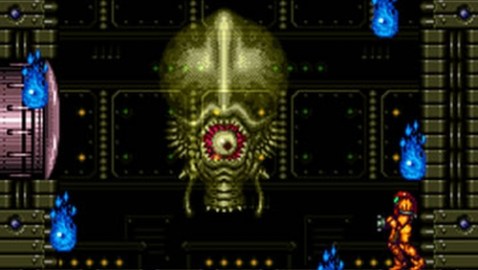
You wouldn’t think this would even register as scary in a game where you fight a space dragon in a world of lava, but here we are.
I loved the Wrecked Ship in Super Metroid. Honestly, I loved the whole game, so in many ways that’s not terribly interesting, but the Wrecked Ship in particular stood out in my mind. Yes, it was clearly a part of Zebes, but it was also this strange interloper, an alien element unconnected to the larger plot. I remember exploring it before it was powered on, then again after it had regained its power, at once intrigued and confused as to its ultimate purpose.
Super Metroid, of course, is not a horror game. But it’s also not the only game that makes use of horrific asides.
A horrific aside is a segment in an otherwise non-horror game that inserts a few elements of horror into play, whether you were or weren’t expecting it. When done right, it breaks up the flow of the game without being jarring, giving a sense that the player is more vulnerable than previously thought, mixing in shades of fear without making the whole game an exercise in terror. Sometimes, it’s even more scary and memorable than when the whole game is focused around the horror.
Why didn’t Roger Ebert want games to be art?

There are so many different ways in which video games can be art that I can fill this article with screenshots of games that are all different sorts of art and still have space left over.
Roger Ebert was a brilliant man, a spectacular critic, and absolutely clueless when it came to video games. He wrote a long-winded defense of why video games can never be art which was wrong when he wrote it, then he wrote more on the subject which was still wrong, and he went to his grave being wrong. And it’s a shame that we lost him, and he was a great light, and his criticism helped shape my own critical voice, and had we met he would have had no idea why I did anything I did, because he thought video games weren’t art.
I’m not interested in opening that debate, though, because as far as I’m concerned it’s boring as hell. Are video games art? Yes. We’re done. No, what’s far more interesting is the question of why people would fight against that. Why would you spend time and effort creating definitions that try to peg it as not art? Why would you put so much energy into deflecting the possibility? Why would anyone want to ensure that video games aren’t seen as art?
Challenge Accepted: What makes a good challenge?
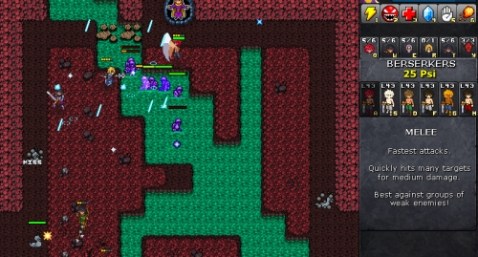
It’s not the fault of the level, it’s the fault of my own choices.
Good challenges are a little like pornography: when you see them, you know it.
Glib though that may be, the fact is that there’s no single formula that leads to a fair and enjoyable challenge every time. Heck, not too long ago I was talking specifically about challenges that work fine in one place but don’t work at all in another game or setting. So let’s be real and say that at best, you can put together the elements that should make for a good challenge whilst accepting that it might all fall apart under scrutiny.
Still, there are elements that point in the right direction. Perhaps it would be more fair to say that simply putting these things together won’t create a good challenge, but a good challenge will assemble all of these in a way that makes sense. Which brings us back to the same fundamental question in need of an answer. What makes for a good challenge?
 Recent Work
- An error has occurred; the feed is probably down. Try again later.
Chocobo Dash
- An error has occurred; the feed is probably down. Try again later.
 Eliot Lefebvre