Challenge Accepted: The exploit experience
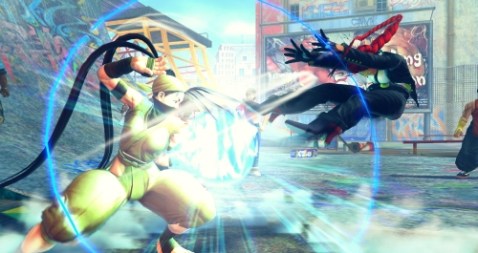
Every inch, every move, every frame can matter.
There are two words that are basically interchangeable when dealing with games: “exploit” and “trick.”
Oh, sure, they’ve got different connotations, but they both boil down to the same thing. There is a spot in this boss room where the boss will never hit but you can keep attacking him. This merchant allows you to resell experience potions as long as you don’t leave the shop interface, but you still gain all of the experience as soon as they enter your inventory. Pause the game on these bosses once an attack hits and the game will keep registering the attack as hitting, so you can unpause in a minute and win.
Pretty much none of these things are intended design elements of a game. They’re broken. Yet they’re also a part of the game, sometimes in a way that can’t be patched out. So why do we call some of them exploits and some of them tricks? How do you factor in these elements of the game that are broken just by kicking the tires?
Game farts
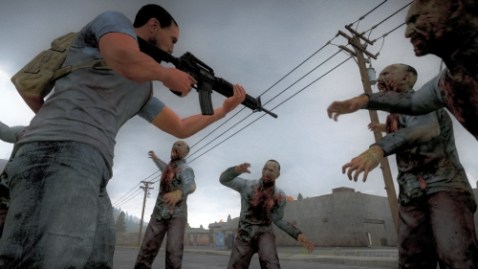
Just because it was an easy way to print money once doesn’t mean it will be forever.
By most of the accounts I’ve read, H1Z1 is not a particularly fun game to play unless you like DayZ, in which case it’s still not a very fun game to play because it’s a weak copy of DayZ. Which in and of itself is fine. Sometimes a game just doesn’t turn out to be all that fun, you try it out and it turns out the idea didn’t gel well or it was too similar to its source or whatever.
What makes this seem odd to me is that the game is coming from Sony Online Entertainment, which as a studio does not exactly have a shallow bankroll. I’m not even talking about whether or not it’s a studio that can produce great games, I’m talking about the fact that as a studio it could afford to let this die on the vine.
I don’t want to say that the weirdest part of the past several years has been watching games move into earlier and earlier sales for “early access.” But what surprises me is that increasingly, it’s not the little indie studio that needs cash now before the workstations get repossessed. It’s the huge companies that can, legitimately, axe a project on the basis that it’s not very fun to play after all.
Marlow Briggs and the God of War
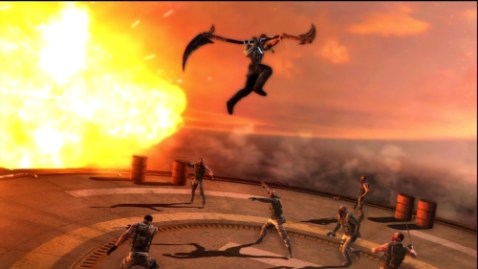
I don’t know about you, but I find this a lot more believable than having your superpowered hero come from a culture which was famous for its military discipline and unit organization.
It took me about six hours, start to finish, to get through Marlow Briggs and the Mask of Death. Considering that I was playing it at the same time as Final Fantasy IV: The After Years and my usual Final Fantasy XIV shenanigans, it took me a few days of real time, but it is not a particularly bulky game. Not that you’d expect a whole lot from a game that costs you a grand total of five dollars.
But I’m pretty sure I had as much fun with it as games that cost me ten times as much.
In a just world, this would have been the first game of a series that would predate God of War, because I’d much rather be playing the seventh installment of Marlow’s adventure than watching Kratos grimace through a field of inexplicable tits and sneering white guy violence. Alas, we don’t live in that world, we live in this one. But comparing the two is telling, because it’s one of those times when a much cheaper game manages to do everything a more expensive equivalent does with equal panache – and often with traits that the “bigger” title lacks altogether.
Today and yesterday

Boy, this game was going to be super important and a long-runner until five seconds after it launched and no one cared.
Pop quiz, folks: who can tell me the five nominees and the winner of the 56th Academy Award for Best Picture? No using Google. These were the five best things to come out in the year of my birth, right?
I’m going to guess that you either failed that test or immediately said “this is stupid” and skipped on to the next line, both of which are completely legitimate things to do. Because if you can’t think of the answer… well, obviously the five would-be best movies of 1983 didn’t really stick in your memory, did they? They might have been important at the time, but they might not have lived up to the test of time.
I’m hard-pressed to tell you the best games of 2014, but I have no problem telling you a bunch of games that are still worth playing today with no regard for release date. And games have come and gone on that list over the years, because the truest test of quality is one you only see in hindsight. They’re what keeps being worthwhile years later, and sometimes it seems almost arbitrary what gets immortalized and what gets forgotten.
 Recent Work
- An error has occurred; the feed is probably down. Try again later.
Chocobo Dash
- An error has occurred; the feed is probably down. Try again later.
 Eliot Lefebvre