Telling Stories: The opening still matters
 Endings are the part of a story that tends to get the most press as being complicated, and with good cause. A bad ending makes you wonder why you wasted the time necessary to get to the ending, after all. It’s as true with roleplaying as anywhere else, which is why I’ve had more than a few columns on making satisfying endings in a medium of ongoing roleplaying where nothing ever really ends so much as it sort of concludes.
But what gets skipped over a lot is that the beginning matters, too. Maybe not as much as the conclusion, but in some ways it’s even harder to recover from a slipshod start. A poor ending makes people roll their eyes as they walk away, but a poor start leads to walk-offs before you even get the chance to end.
So how do you make the beginning memorable, concise, and enjoyable? How do you kick off a plot with all of the same panache you’d expect from a conclusion? I’m glad you hypothetically asked.
Telling Stories: Three beats
Raymond Chandler had a rule which is appropriately called Chandler’s Law. When a writer has forced himself into a corner, have a man burst through the door with a gun in his hand. Even if that turns out to be an absolute brain fart, the event is absolutely going to get the plot moving again, if for no other reason than the simple fact that having people burst in the door with guns generally changes the tenor of conversations at even the snootiest of events. “I say, Fitzgerald, there’s a gentleman here with a firearm! Do you believe he’s bitter over some tedious old affair that no one remembers?”
You might not be a fan of Chandler’s work, but he knew how to keep a story moving, and it leads nicely into the three-beat structure which I’ve been teasing for a couple of weeks without explaining. Roleplaying scenes have a beat, a certain cadence and flow, and the three-beat rule is all about making sure that the scene keeps moving no matter what. It’s about keeping things humming along at a decent pace without being breakneck, and thinking about scenes less in terms of “here is the one thing I am doing right now” and more in terms of “here are the actions and here’s why anyone should care.”
Telling Stories: Short stories with tragic endings
Not every sad story is a tragedy. You have to do a little more legwork than that.
A character who loses the man she loves is a sad story. A character who loses the man she loves because when it came down to it she simply could not be honest with him, not without giving up a part of herself that mattered more than him? That’s tragic. A man who became everything he ever hated because he was too afraid of being controlled by others to let his guard down. A pair of people who once were lovers, still love one another, but find themselves on opposite sides of a war because the strong ideals that once drew them together now push them apart.
Tragedies aren’t just sad events. And tragedies are not the only way to create drama, and they’re not the only sort of dramatic characters worth considering. So let’s talk about what tragedies are not, about what tragedies are, and about how to make the most of them in play.
Challenge Accepted: What makes a good challenge?
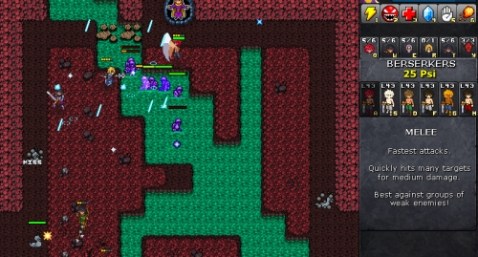
It’s not the fault of the level, it’s the fault of my own choices.
Good challenges are a little like pornography: when you see them, you know it.
Glib though that may be, the fact is that there’s no single formula that leads to a fair and enjoyable challenge every time. Heck, not too long ago I was talking specifically about challenges that work fine in one place but don’t work at all in another game or setting. So let’s be real and say that at best, you can put together the elements that should make for a good challenge whilst accepting that it might all fall apart under scrutiny.
Still, there are elements that point in the right direction. Perhaps it would be more fair to say that simply putting these things together won’t create a good challenge, but a good challenge will assemble all of these in a way that makes sense. Which brings us back to the same fundamental question in need of an answer. What makes for a good challenge?
Mangling terms

Sometimes, admittedly, it’s not necessary to call a game a clone to get an idea of how it plays.
Remember when “clone” wasn’t a term of scorn when discussing a video game?
When people first started saying thing like “Saints Row is a clone of Grand Theft Auto III,” it was actually conveying useful information. Considering the sheer number of games available and the tendency for a new game to closely emulate previous games with a few changes, “X-clone” can often be more descriptive than a simple genre listing. Sure, both New Super Mario Bros. and Sonic the Hedgehog 4 are side-scrolling platformers, but saying that a game is a clone of New Super Mario Bros. provides far more relevant information about how the game plays.
Not that it matters any more, because if you call something a clone of another game, the implication is that it’s a bad game. Because calling things clones has fallen victim to an odd part of discussing games, where we as a culture somehow manage to create and then destroy the terminology we would use to discuss this stuff. It happens everywhere given time, but when it comes to game our new terminology seems to have a half-life of ten minutes before it becomes totally useless.
 Recent Work
- An error has occurred; the feed is probably down. Try again later.
Chocobo Dash
- An error has occurred; the feed is probably down. Try again later.
 Eliot Lefebvre