Challenge Accepted: When good trouble goes bad
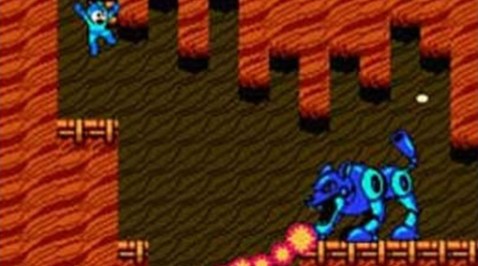
The first time you see these, you understand their attack patterns. The other way around, it would kind of be for crap.
If you’ve played Megaman 2, you know about the disappearing block segments. It starts as a simple jumping puzzle and gets more dangerous as time goes by – blocks fade in, then fade out after a second or two, forcing the player to jump from one vanishing block to the next, a masterpiece of careful timing and understanding the patterns. But the game didn’t stop there. Several of your “weapons” allowed you to make platforms which moved in unique ways. The result was that even though the segment was tricky, if you had too much trouble with it, you could bypass it. You’d have less energy on those tools if you needed them again and had to choose the right tools carefully, but there were other options.
By contrast, when the blocks reappeared in a couple of the more recent games in the Megaman X series, you didn’t have access to those extra abilities. As a result, the challenge became much harder and – really – a lot less fun. You either did it perfectly or you had no alternative. In Megaman 4, meanwhile, the platforming elements in many stages were so easy to bypass you could basically ignore them altogether. They took a good core challenge and wound up making it not nearly as much fun any longer.
Telling Stories: Avoiding cabinet flaws
 Once you get the idea in your head that characters should be flawed, you don’t immediately know how to go about making that a thing. So you wind up with characters who have cabinet flaws, and over time you solve those flaws, and then suddenly your character isn’t flawed any longer. You’re right back to boring old square one, but you can’t not address the cabinet flaw, right? The whole reason it’s there just cries out to be addressed and rectified!
Of course, it would probably help if I took a step back and defined what I meant in the first place by a cabinet flaw.
See, the idea of character flaws is easy to comprehend. You want your characters to have problems, to have to struggle to overcome something. At their core, flaws are problems. So you give your character an obvious hole in their abilities, something that they distinctly cannot do rather than will not do. The archetypical example is a paladin who’s ruggedly handsome, brilliant, and fearsome on the battlefield – but per the name, he can’t fix cabinets.
Keep the lights on
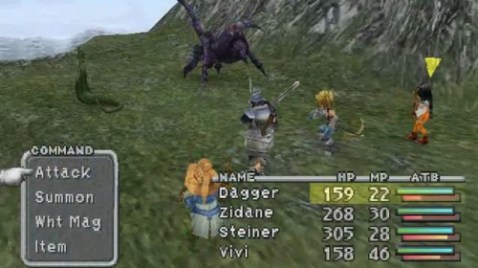
The light of the Crystal, great, but can we talk a little more about the light of the server’s power indicator?
When Final Fantasy IX first released, it had a whole companion website, PlayOnline. The site was an in-depth interactive walkthrough for the entire game, filled with database information, all the stuff you could possibly want from a site devoted to a single game. The site was also designed to work with people who had bought the strategy guide, which tied into parts of the website wherein players could enter codes and see additional tips and tricks about a given area of the game.
That was dumb all by itself. But it makes the owners of the strategy guide look even more silly now, because that walkthrough site is gone. It doesn’t exist any more. The URL is now devoted to Final Fantasy XI, after Square’s grand ideas about that service’s functionality fell through.
You might say that it’s irrelevant, and it certainly is. But it speaks to an issue with a lot of games that were launching around the same time that the century turned, and one of the features that gaming is still struggling to deal with. Everyone knows, of course, that online functionality is important. It’s also not free, and the graveyards are littered with the bones of functions that got torn away.
Telling Stories: Fueling the maze-builders
Two weeks ago, I put forth what I think is a fairly simple philosophy for getting storylines moving in games – I don’t build the story. I just lay out tools, and the other people involved happily build the maze themselves with a minimum of prompting from me. I’m proud of the article and think it’s pretty completely on-point. What I didn’t go into depth about was how you do that.
Sure, it’s all well and good to say you assemble tools, but I’m willing to bed that if you put some lumber and some tools in the yard and then hide, you will not find people coming by just to build you a shed.
A lot of it comes down to tricks that work during tabletop roleplaying and are easily ported to roleplaying arcs just as easily, with a few added tricks brought on by the nature of the beast. So once you’ve got a plan in mind, it’s time to start putting your tools in place and using them to let players assemble a maze you never even had to sculpt.
Challenge Accepted: Being better than you were
Not this kind of growth. This is different.
For the past decade or so, the term “RPG elements” has been thrown around frequently and with such fervor that you could be forgiven for assuming it’s the official brand of ball used by Major League Baseball. Really, what it means is that games have discovered and embraced character growth, the idea that the loser you’re playing in the first level will be able to flick battleships away with a minor hand gesture by the end of the game. Upgrade, improve, level up, get better stuff, leave the worst stuff behind.
Character growth is something that I could honestly spend months talking about, period, as well as discussing how growth ties into rewards (which I have talked about) and the many sorts of growth that are out there (which I haven’t, but I should in the future). But this is a feature all about challenges, and the fact of the matter is that character growth is kind of a bastard for challenges. Because you have to take it into account, and yet at the same time you can’t predict how players are going to use it in the slightest.
 Recent Work
- An error has occurred; the feed is probably down. Try again later.
Chocobo Dash
- An error has occurred; the feed is probably down. Try again later.
 Eliot Lefebvre