DRM has changed, DRM has stayed the same
All turns quiet; I have been here before.
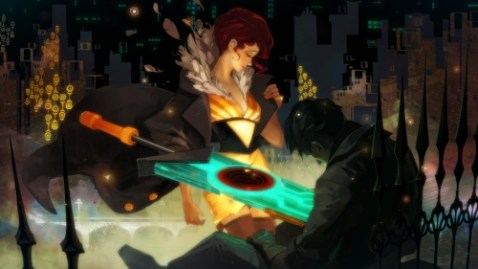
A couple of weeks ago, I had a really good week on game services. Origin was giving away Plants vs. Zombies for free, so at some point I can now do what 80% of human beings on the planet have done and play it, thereby allowing myself to enter into conversations with others once more. Transistor also came out, and thanks to the kindness of my brother I also was able to download and play that all the way through. If you need a thumbnail review, it’s good.
I was talking with a friend about all of this, however, and the subject of Steam came up, since that’s really your main option for buying Transistor at this point. That led into a discussion of Steam as a form of generally benevolent DRM and how having DRM, however benevolent, is somewhat insidious. There is, strictly speaking, nothing that will stop Valve from cancelling your account, deleting all your game, and sending you a picture of a squirrel getting run over by a truck.
Which is true. But let’s face it – we’ve been dealing with DRM as long as we’ve been dealing with games. It’s not whether it’s restrictive or not now, it’s just about how it restricts us.
Telling Stories: Fitting in the circle
 I was introduced to the idea of character circles a long time ago, in an essay about writing Transformers fanfic of all the things in the world. Needless to say, that’s not my usual go-to source for writing advice or roleplaying advice, but it’s still a good idea, and it’s one that I’ve internalized over the years as being extremely useful for both. Especially if you’re dealing with characters who change a lot over time.
Let’s be honest and admit that characters in roleplaying can be somewhat… fickle. They’re probably being consistently played by one person, yes, but your moods change, circumstances change, and what seemed like a perfectly good idea with your character yesterday doesn’t seem like one today. Over time, you get a feel for what your character will or will not do, but that doesn’t change the fact that sometimes you just make a call and it might be almost entirely arbitrary. What you need to describe your characters isn’t a biographic listing of characteristics; what you need is a circle.
Challenge Accepted: The virtues of easy
Why play this instead of something harder? I can think of dozens of reasons.
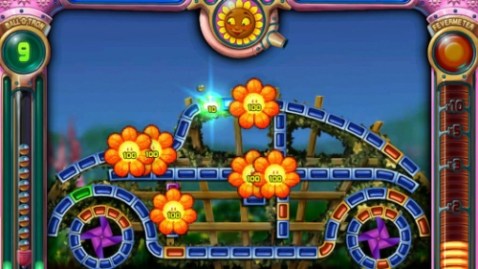
If you can’t understand why someone would want to play an easy game, I don’t think you understand why people play video games at all. I’m not saying you have to want to play one, I’m saying you have to understand why someone will do that. No, saying “because they can’t play well enough to be at the top” does not qualify as understanding.
I like talking about challenge in games – a lot – but I also can’t stand the chest-pounding portion of the general gaming audience who seems to collectively believe that if you’re not turning every game into an arduous challenge then you’re obviously unworthy of purchasing any more games over the course of your life. As if there was no way to enjoy a game that tried just being easy, as if there was nothing to be derived from a game that’s not terribly deep, as if there was no modulation or middle ground between people who enjoy challenges and those that enjoy challenges. Or, for that matter, as if every game wasn’t easy in the right light.
Spoiler warning: all of the above are true.
Where did World of Warcraft go wrong?
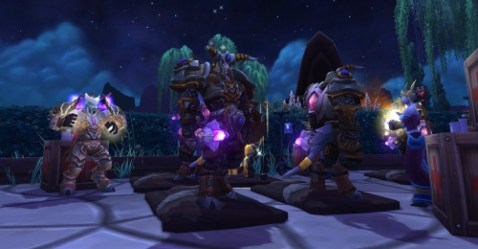
I should not be looking at an expansion filled with draenei and not be excited. This is literally everything I’ve ever wanted.
Something is rotten in the state of Azeroth, and it has been for a while.
The problem of talking about World of Warcraft‘s decline is that no one is interested in doing so. The game’s fans are eager to point out that the game still has an impressive number of subscribers rather than talking about the fact that, on average, the game has been losing more than a million subscribers per year since the launch of Cataclysm. The other side of the coin likes to forecast the game’s death, neglecting to acknowledge that even if the game keeps bleeding off subscribers at this rate it’s got several more years of life left in it while discounting spikes.
But there’s a frank discussion to be had, one that doesn’t invest itself in hyperbole, and it’s obvious that the game is on a downward arc. Over the past four years (Cataclysm launched at the very tail end of year six) the game has lost an extraordinary number of subscribers. Its growth has stalled. This is a stark reversal when the game was in an upward trend for the first six years of its lifespan. Why is that? What’s changed its fortunes so thoroughly? I wonder about that a lot, and I think a lot of it comes down to learning the wrong lessons from its height.
 Recent Work
- An error has occurred; the feed is probably down. Try again later.
Chocobo Dash
- An error has occurred; the feed is probably down. Try again later.
 Eliot Lefebvre