Demo Driver 8: Running With Rifles
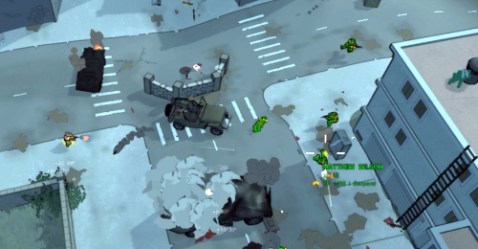
It’s basically like playing with your army men, except you only get one guy and no further control over things.
We are living in the year 2015 of the common era, and folks, I’m as ashamed to write this as you are to read this, but your demo should include a tutorial. You should do the bare minimum necessary to ensure that when someone loads your game they are aware of what in the ever-loving hell they’re doing, because the alternative is both stupid and awful. Precisely one game has ever gotten away with throwing you in sans any tutorial, and that was Worms, which succeeded chiefly on the strength of making progress almost a secondary objective.
Yes, I could write entire articles about my love of Worms. And in this case, the comparison is not entirely unwarranted, as Running With Rifles shares some traits with that venerable squad-based deathmatch. Sadly, it lacks the wit and humor that define that franchise. It also lacks a tutorial, hence my irritation. There’s a lot of stuff going on in Running With Rifles that isn’t really explained, which pushes some of the game’s central conceits out of focus and make it seem less fun than it might be.
Challenge Accepted: The exploit experience
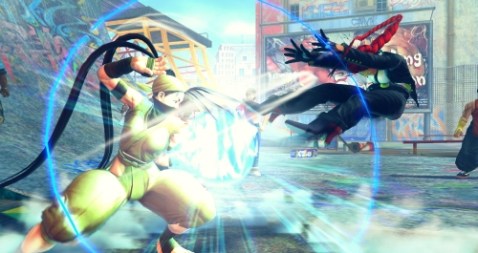
Every inch, every move, every frame can matter.
There are two words that are basically interchangeable when dealing with games: “exploit” and “trick.”
Oh, sure, they’ve got different connotations, but they both boil down to the same thing. There is a spot in this boss room where the boss will never hit but you can keep attacking him. This merchant allows you to resell experience potions as long as you don’t leave the shop interface, but you still gain all of the experience as soon as they enter your inventory. Pause the game on these bosses once an attack hits and the game will keep registering the attack as hitting, so you can unpause in a minute and win.
Pretty much none of these things are intended design elements of a game. They’re broken. Yet they’re also a part of the game, sometimes in a way that can’t be patched out. So why do we call some of them exploits and some of them tricks? How do you factor in these elements of the game that are broken just by kicking the tires?
The Final Fantasy Project: Final Fantasy IV: The After Years, part 9

Artwork from a sketch by Yoshitaka Amano
Time to start going all in, then.
The short version of the flow of the game is that the first seven tales pretty much take place at the same time, following characters hither and yon in a bunch of events that tie together thematically but not in narrative. This, then, is when everything starts getting explained. It’s an interesting approach, which saves the trouble of having a big twist partway through the story but replaces it with a set of mysteries that players can either figure out early or get bored with reading about for the tenth time.
I’ll get more into that once I’m actually done, though. For now, it’s time to jump ahead to the first tale that starts clearing up all of this mess, spearing the events that will take us through the rest of the game. As you could probably guess, that’s a not even remotely subtle reference to the fact that we’re kicking off with Kain, who’s supposed to be a brooding badass but really comes across more as a moping manchild who has serious issues with his spear. That… may both be a little too on-point and unintentionally autobiographical, yes?
Demo Driver 8: Gas Guzzlers Extreme

This game really has nothing to do with gas or cars that guzzle it, despite the title.
The last time I talked about racing games, I made it very clear that there’s a specific sort of racing game that I enjoy. While nothing has ever come close to matching the sheer brilliance of Split/Second and likely never will, I think that’s a better point to aim for than a game than strict simulation. Reality already exists, but in a game you can actually have a race in which cars shoot one another and explode with a meaty feel and never worry about the real consequences something like that would entail.
Gas Guzzlers Extreme seems to agree with me. It is definitely into the camp of unreal racing, with cars happily mounting weapons as they drive around and open fire at one another. And it does that pretty well. But I find myself playing it and feeling as if perhaps it took that a bit too far, turning the game into less a matter of cars racing and shooting and more into a match of tanks without turrets.
Marlow Briggs and the God of War
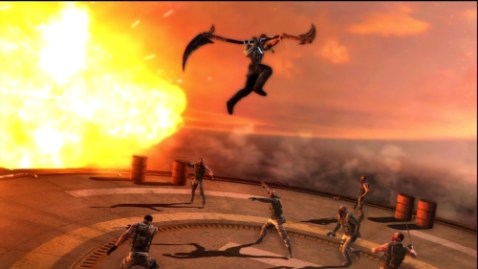
I don’t know about you, but I find this a lot more believable than having your superpowered hero come from a culture which was famous for its military discipline and unit organization.
It took me about six hours, start to finish, to get through Marlow Briggs and the Mask of Death. Considering that I was playing it at the same time as Final Fantasy IV: The After Years and my usual Final Fantasy XIV shenanigans, it took me a few days of real time, but it is not a particularly bulky game. Not that you’d expect a whole lot from a game that costs you a grand total of five dollars.
But I’m pretty sure I had as much fun with it as games that cost me ten times as much.
In a just world, this would have been the first game of a series that would predate God of War, because I’d much rather be playing the seventh installment of Marlow’s adventure than watching Kratos grimace through a field of inexplicable tits and sneering white guy violence. Alas, we don’t live in that world, we live in this one. But comparing the two is telling, because it’s one of those times when a much cheaper game manages to do everything a more expensive equivalent does with equal panache – and often with traits that the “bigger” title lacks altogether.
 Recent Work
- An error has occurred; the feed is probably down. Try again later.
Chocobo Dash
- An error has occurred; the feed is probably down. Try again later.
 Eliot Lefebvre