DRM has changed, DRM has stayed the same
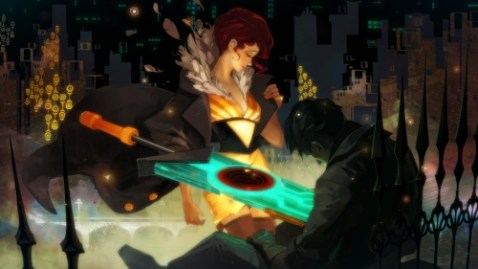
All turns quiet; I have been here before.
A couple of weeks ago, I had a really good week on game services. Origin was giving away Plants vs. Zombies for free, so at some point I can now do what 80% of human beings on the planet have done and play it, thereby allowing myself to enter into conversations with others once more. Transistor also came out, and thanks to the kindness of my brother I also was able to download and play that all the way through. If you need a thumbnail review, it’s good.
I was talking with a friend about all of this, however, and the subject of Steam came up, since that’s really your main option for buying Transistor at this point. That led into a discussion of Steam as a form of generally benevolent DRM and how having DRM, however benevolent, is somewhat insidious. There is, strictly speaking, nothing that will stop Valve from cancelling your account, deleting all your game, and sending you a picture of a squirrel getting run over by a truck.
Which is true. But let’s face it – we’ve been dealing with DRM as long as we’ve been dealing with games. It’s not whether it’s restrictive or not now, it’s just about how it restricts us.
Demo Driver 8: Alien Rage (#85)

Four unlikable protagonists rolled into one! How can you lose?
The first installment I did of this feature was about Alien Breed 2: Assault. I wouldn’t say I critiqued that game harshly for being generic, but the acknowledgement was there. Yet for all that, the nature of it didn’t make the game bad. It was what it was, and it certainly would win no prizes for originality, but I try hard to point out that there’s a distinct difference between games that scratch an itch I don’t care for (DRIVE ’07, Eschalon Book 1), games that are generic but solid (Alien Breed 2: Assault), and games that are actually not very good.
I bring this up because Alien Rage is sipping from the same well as Alien Breed 2: Assault, but where the former feels kind of bland but eminently playable and solid, Alien Rage is a game that made me lose interest before I had even gotten to shooting anything. I almost wish I had stopped there, because I knew it wasn’t going to get better, but in the words of Macbeth, bear-like I fought the course. It is a game best used as an object lesson about why “generic” doesn’t mean “bad” but it certainly doesn’t mean good either.
The Final Fantasy Project: Final Fantasy II, part 7
Artwork from a sketch by Yoshitaka Amano
Finally, the endgame. It’s refreshing, in a way. There are no more plot holes to nitpick, no more fetch quests to be sent on, nothing but several floors of dungeon between the main characters and the final boss. Through the Jade Passage, into Pandaemonium, and then up against the Emperor.
Again. I mean, I killed him once, so it doesn’t seem like he’d be able to get harder this time around based on the fact that he couldn’t stop me while he was alive, but I guess Hell was waiting for him or something? I suppose we can mark him under the long line of Final Fantasy bosses with plot armor and plot skill absorption.
Of course, the game is going to do its level best to go out like it came in: with thunderously irritating and ill-conceived mechanics. First, the Jade Passage, which is one of only two things that you actually travel to via the airship. Once inside, you’re in the endgame for good. There’s no getting out, so you’d better have everything you need on hand.
Demo Driver 8: Eschalon Book 1 (#224)
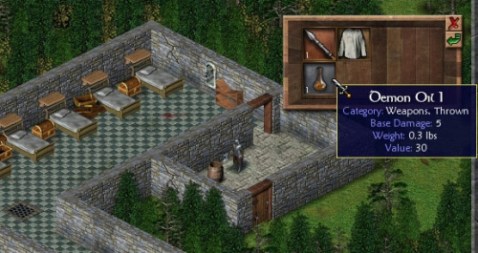
“This,” he said, “is going to be one of those games that’s like a roguelike with its nitpicking attention to detail but without its relentless powergaming to take the edge off, isn’t it?”
“I’m afraid so,” replied the narrator. “You might want to get a drink.”
The trouble with talking about games that are deliberate throwbacks to an earlier period of gaming is that critiquing them is like critiquing nostalgia. You can tell me time and again that gaming has moved on a great deal since Kirby’s Adventure or Super Metroid, for example, and you’d be entirely correct in saying so, but that’s not going to make me like either game less. Handing someone a title like Eschalon Book 1 is like being asked to tell someone why their fond memories of an earlier age are wrong or confirm that they’re totally right and games suck now.
There’s your salt to munch on whilst I tell you that this is exactly the sort of game that made me reluctant to get into PC gaming for a really long time. Much like there’s a spectrum of racing games you can make, there is a spectrum of different RPGs you can make on a computer, and Eschalon falls firmly on the side of the camp that I don’t think I’ll ever be able to get into. The reason being that I was a teenager, I played Dungeons & Dragons, and I would prefer to avoid this attempt to replicate that experience.
 Recent Work
- An error has occurred; the feed is probably down. Try again later.
Chocobo Dash
- An error has occurred; the feed is probably down. Try again later.
 Eliot Lefebvre