A virtual gun and good entertainment (or why you still need to play Spec Ops: The Line)
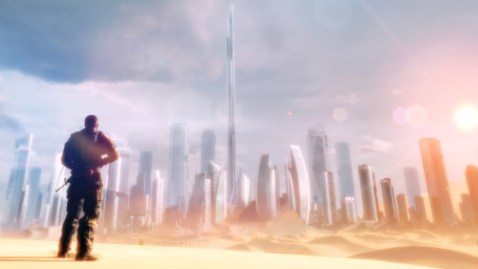
The heavenward spire never looked so foreboding.
There’s something unsettling in playing Spec Ops: The Line, long before its major twist really falls upon you. Oh, sure, it plays like a conventional third-person shooter as you storm along and gleefully pull the trigger on your gun, but right from the start there’s something unsettling therein, something that gnaws at you. The environments are too claustrophobic, the dialogue too close to the edge of snapping and growling, every moment too pitched and agitated for what’s going on. Sudden slowdowns punctuate combat as you kill people, seemingly without reason, the camera and the events around you drifting slower as if to give you just enough time to really think about the life you ended.
Of course, at this point you don’t need me to tell you what the deal is with the game. It’s been raved about critically, praised as a deconstruction of the real-is-brown military gun-porn shooter by more or less every outlet in existence. Sales weren’t what they could have been, but it succeeded at its goal. But how much merit does it still have? When you know the gut punch that it’s aiming for you, is it still as effective? Does the game still have a point when the only audience that’s going to remember it is the audience that has the least need of it?
Challenge Accepted: The virtues of easy
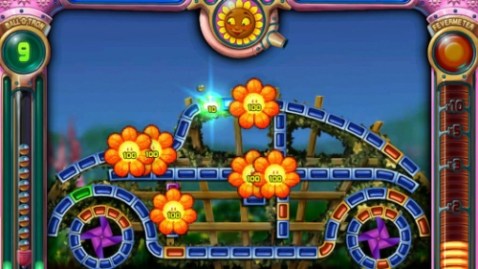
Why play this instead of something harder? I can think of dozens of reasons.
If you can’t understand why someone would want to play an easy game, I don’t think you understand why people play video games at all. I’m not saying you have to want to play one, I’m saying you have to understand why someone will do that. No, saying “because they can’t play well enough to be at the top” does not qualify as understanding.
I like talking about challenge in games – a lot – but I also can’t stand the chest-pounding portion of the general gaming audience who seems to collectively believe that if you’re not turning every game into an arduous challenge then you’re obviously unworthy of purchasing any more games over the course of your life. As if there was no way to enjoy a game that tried just being easy, as if there was nothing to be derived from a game that’s not terribly deep, as if there was no modulation or middle ground between people who enjoy challenges and those that enjoy challenges. Or, for that matter, as if every game wasn’t easy in the right light.
Spoiler warning: all of the above are true.
The Final Fantasy Project: Final Fantasy II, part 6

Artwork from a sketch by Yoshitaka Amano
I realize that I’ve been pretty hard on Final Fantasy II up to this point, generally for good reason. The game has a lot of ambition, but ambition is only commendable insofar as it leads you to reach upward, and this is a game that continually falls short of where it wants to be. What was innovative more than twenty years ago is less so today, and even then I imagine these holes and weaknesses were visible to players; breaking the game’s mechanics is hardly a new thing, for instance.
That having been said, the Mysidian Tower is kind of thoroughly enjoyable. It’s a dungeon where all of those well-designed dungeon elements that the game has sported can really get up and do a dance, and the enemies have tricks that feel like they’re at least meant to be interesting rather than annoying. I couldn’t autopilot through these fights, but neither did I find myself painfully bored as I made my trek.
Demo Driver 8: Insaniquarium (#403)
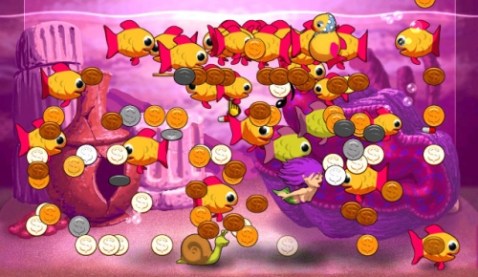
You probably pictured halfway to this to begin with, and that’s fair.
PopCap games, by their very nature, are not complex beasts to decipher. You can get a sense of them within a few moments. Oh, sure, they ramp up in complexity a fair bit, offer new wrinkles and the like, but these are not games with deep narrative structure and bewildering turns. These are games in which brightly colored things interact with other brightly colored things in a fashion which is fun enough to play for a few hours without realizing that you’ve been playing for a few hours.
If you are turned off by the idea of bright colors being a fun ride, you may wish to re-examine your life goals, as at some point you appear to have mistaken cynicism for depth.
Insaniquarium is one of PopCap’s earlier offerings, and as such it’s a bit rougher than their later offerings but still offers more or less what you’d expect. Sure, the game is probably best defined as a puzzle game, but it’s more of a fish-management simulator with pooped coins and alien invasions. If you like PopCap games, you’ll like it. You get the idea.
Zones of death!

“Oh, let’s build a little cottage up there!”
– No one, ever, in the history of the world
Do you know what the top of Mt. Everest is called? The Death Zone. Well, all right, to be really technical the Death Zone is any region in climbing which involves going so high that human beings can’t get enough oxygen to live. It’s a region wherein every moment you stand there brings you closer to death, because you cannot get enough precious, life-giving oxygen.
Why in the world are you going to the Death Zone? Do you want to die? This isn’t the Maybe Sort Of Possible Death Zone If You Know What I Mean, Wink Wink. It is the Death Zone!
Not that this makes the average climber any dumber than the average video game character, or for that matter, the average gamer. We get a lot of laughs out of watching characters do stupid things that we like to say we’re smart enough to avoid, but the fact of the matter is that we’re in the same boat as the horror movie fans who go wandering around int he dark without a flashlight without thinking about it.
 Recent Work
- An error has occurred; the feed is probably down. Try again later.
Chocobo Dash
- An error has occurred; the feed is probably down. Try again later.
 Eliot Lefebvre