Demo Driver 8: Just Get Through

Assume everything on every map will kill you.
In the oldest days of video games, this is what it was all about. We didn’t get an introduction to what we were doing. There were no explanations. If you were very lucky, there was an ending screen or two that tied everything that you had done into some sort of overarching narrative. More often than not, though, what you had was games clearly from the same food group as Just Get Through, challenges without context.
This is made somewhat more forgivable when you consider that the game is a one-person effort, and even more so when you admit, however grudgingly, that the game does a more than halfway decent job of living up to the spirit of what made older games fun without being tied into nostalgia or the trappings of the games. You start out by spawning in the middle of a cavern network with no real indications of what you should be doing, and no answers are forthcoming. All you can do is try to find the next portal. Or die along the road.
Eventually, you will die along the road.
Fundred percent completion

I’ll probably keep playing this game for a long time, even if I don’t have any more objectives to chase therein.
I remember when I stopped caring about getting 100% completion in a game, and I remember the game. It was Grand Theft Auto: San Andreas, and after having done the hard work necessary for 100% in both of the previous games, what stopped me this time was nothing like a challenge too difficult or a mission too irritating. No, it was a bug.
San Andreas consisted of three cities – Los Santos, San Fierro, and Las Venturas, functional stand-ins for Los Angeles, San Francisco, and Las Vegas, respectively. Each one had little tokens you had to pick up throughout the city for 100% completion; so far, so good. San Fierro asked players to take snapshots with the camera to imitate the standard San Francisco tourist. Only one little problem emerged – I snapped one of the pictures, and it marked as cleared, but the completion wasn’t noted by the game.
Getting the shot opportunity back was impossible. Going back to an earlier save was impossible. Just like that, the game had rendered 100% unreachable no matter what I did. And I was angry at the time… but then I realized that the game had kind of given me a blessing by freeing me from crap I didn’t really want to do in the first place.
The Final Fantasy Project: Final Fantasy V, part 3
Artwork from a sketch by Yoshitaka Amano
So Lenna is convinced that her father’s wind drake is on top of the nearby mountain, and the rest of the party agrees to go along with this because, well, they weren’t doing anything. Also there’s no other route to the water crystal than via the air at this point, so that’s a good motivator. The trek to North Mountain isn’t terribly interesting, with its very name making it pretty clear where you’re heading.
As with most dungeons that take place on mountains through the series, this is not a particularly interesting or ornate area, largely linear and without much in the way of hidden passages. What is interesting is that you’re probably moving along nicely with your character jobs by this point, unlocking some abilities to toss into your secondary slot and probably considering swapping jobs on some characters. This is actually reasonable, since later job levels take more and more ABP to learn, but later enemies reward more ABP for clearing a battle. If you haven’t been constantly swapping, as you move through this dungeon you’ll start picking up some real options.
Demo Driver 8: Secret of the Magic Crystals
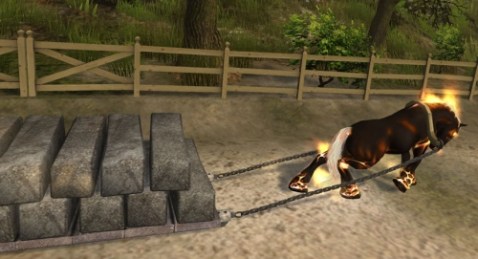
Back in the 90s, I was in a very famous teevee show.
Huh.
One of the weird things about gaming is that there are these shadow genres which exist despite being almost totally ignored by the rest of the population. The Horse Game is one of those genres. There are tons of these games out there, and every single one of them smells like shovelware and, well, horse stables. It’s all about training your horses, breeding them, carefully brushing them, and so forth. And they are legion. These games come out, they keep coming out, and presumably they are in fact making money. How? I don’t know!
I didn’t actually know that Secret of the Magic Crystals would fall into this genre until I clicked the name, but it does indeed. It’s a game about raising not just normal boring horses, but special magical equine creatures like pegasi, unicorns, and if you get particularly lucky 90s sitcom stars. (Not so much, really.) And hey, maybe it was awesome! I knew nothing about this genre, right? Why not give it a shot?
The Seven Deadly Sins of Game Design
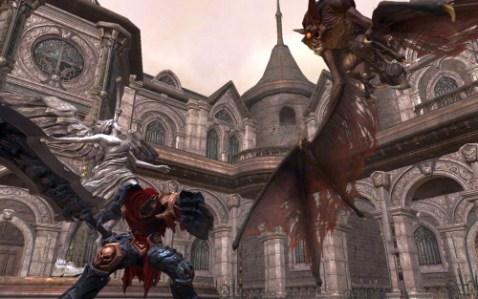
I suppose it’s not really judgement day, but it’s similar.
Woe unto ye, designers, for ye have sinned.
The seven deadly sins in Catholicism are functionally the ur-sins. They aren’t the worst, they’re the roots from which all other sins spring. And I thought it would be edifying to remember that the same concept applies to game design and gameplay, starting from the design side. For there are sins in game design as surely as anything, and some of them are not what you would expect.
Since we’re stressing the idea of the seven deadlies, of course, they should line up to the big ones – greed, envy, sloth, lust, wrath, pride, and gluttony. And I could write for weeks about how those sins are very different from what people usually imagine when they hear those words, like how sloth is less about inaction and more about profound spiritual ambivalence, or how gluttony isn’t just a matter of eating stuff. But that’s really outside the wheelhouse of what is largely a game design blog, isn’t it? So let’s talk about the seven deadly sins of game design.
 Recent Work
- An error has occurred; the feed is probably down. Try again later.
Chocobo Dash
- An error has occurred; the feed is probably down. Try again later.
 Eliot Lefebvre