Challenge Accepted: What makes a good challenge?
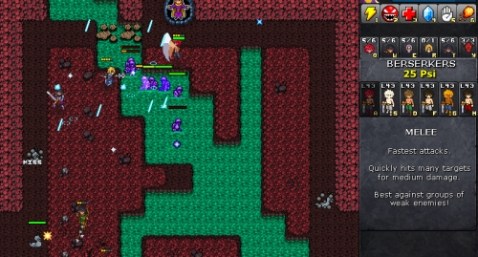
It’s not the fault of the level, it’s the fault of my own choices.
Good challenges are a little like pornography: when you see them, you know it.
Glib though that may be, the fact is that there’s no single formula that leads to a fair and enjoyable challenge every time. Heck, not too long ago I was talking specifically about challenges that work fine in one place but don’t work at all in another game or setting. So let’s be real and say that at best, you can put together the elements that should make for a good challenge whilst accepting that it might all fall apart under scrutiny.
Still, there are elements that point in the right direction. Perhaps it would be more fair to say that simply putting these things together won’t create a good challenge, but a good challenge will assemble all of these in a way that makes sense. Which brings us back to the same fundamental question in need of an answer. What makes for a good challenge?
The Final Fantasy Project: Final Fantasy IV, part 9

Artwork from a sketch by Yoshitaka Amano
Here we are, back at the tower again, assaulting it in the hopes of accomplishing… something. I’m not entirely clear on what the heroes plan to actually do here. On one level, we’re sort of chasing Rubicante, or Edge certainly is; on another level, it’s one of those situations wherein the plot has stepped back to allow the player to keep moving forward based solely on what’s available to access. Since the Tower of Babil features rather prominently in Golbez’s plan, I suppose anything that involves us screwing with it is probably a good thing.
It is neat that you see this tower from two sides, though, with this run starting closer to the top while the previous one started at the bottom. Edge helpfully ninja-moves us into the tower proper, and the group can start heading toward… wherever Rubicante is now. Hey, maybe he he still has the crystals! That would be a good thing. Let’s go with that as our motivation, then.
Demo Driver 8: Among the Sleep
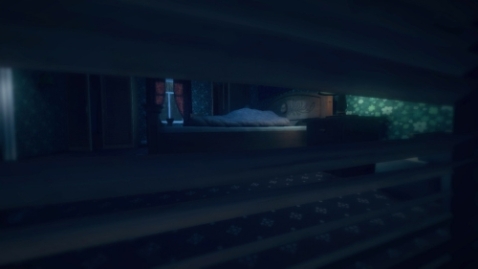
Standing here, with sounds coming through the house, not sure where your mother is, the world too dark to make out details… that’s scary.
At a glance, Among the Sleep is two different games, one of which is brilliant and one of which isn’t. Which is especially interesting as one of the games is only a game by the thinnest stretch of the imagination, and yet it’s the one I found more interesting; the demo lost me when it started inserting a bit more gameplay, which merited far less attention in general.
The premise of Among the Sleep strikes you as novel right from the start. Your character is a two-year-old child, and it’s played from the first-person perspective. And it’s a horror game. More than that, it’s a horror game of the sort that you become immediately familiar with mere seconds after you start up the demo. It is dark, you are young, and you are alone. Bad enough in and of itself, but then your crib tilts over, you hear a crash from downstairs… and you can get out. To find your mother.
Telling Stories: I wish I was
 At its most basic level, all roleplaying is a form of wish fulfillment. Sure, you may not want to be your characters, but you presumably enjoy slipping into their heads for a little while. It’s a chance to step out of yourself and engage in behavior you never would in a normal setting, whether that behavior is something you’d personally find reprehensible or just something different from the norm. (Slaying monsters, for example, does not form the foundation of a solid career path in modern society. I’ve checked.)
That doesn’t mean it’s always a good thing.
Wish fulfillment is a tricky thing to discuss when it comes to roleplaying precisely because it’s always there, even if it’s usually a background issue. You can’t pretend it has nothing to do with your characters, but you also don’t want them to be nothing more than pure self-serving fantasy engines. So let’s talk a little bit about wish fulfillment in games, how it works, what you can get out of it, and how you can avoid making your characters into the gross sort of wish avatars.
The Final Fantasy Project: Final Fantasy IV, part 8
Artwork from a sketch by Yoshitaka Amano
The road to the Tower of Babil is a long one. Part of that is because it is not, strictly speaking, a road; it’s a layer of solid rock over rivers of magma. Another part of that is that it is not a tourist destination. Much as I like the idea of dwarven groups riding little dwarven tour buses back and forth, sending postcards that read “LALI-HO FROM THE TOWER OF BABIL,” that’s not what happens.
I keep getting my hopes up, but it’s time to face fact.
After a fairly long trek, the dwarven tanks are finally visible, opening fire on the tower as a distraction tactic. That’s enough distraction for the group to slip in on the bottom floor, rushing toward the obviously advanced facility suspended over a river of lava. The casual presence of technology feels a bit disconnected, but it’s also an interesting echo of the endgame portions of Final Fantasy I, a world far bigger than the pseudo-medieval setting that has seemed fairly stable up until now.
 Recent Work
- An error has occurred; the feed is probably down. Try again later.
Chocobo Dash
- An error has occurred; the feed is probably down. Try again later.
 Eliot Lefebvre