Telling Stories: The in-character post
 Having a million more ways to interact with people online than we had back in 1997 has meant that people have gotten creative. Very creative, at times. Instead of just doing all of your roleplaying via the game now, you can have in-character journals, Twitter accounts, Tumblr accounts, and so on. Even I’ve gotten in on the fun; as I’ve mentioned in the past, I’m running an in-character Twitter account for my shaman over in World of Warcraft, largely because the roleplaying communities on my servers have mostly dried up.
The question, of course, is whether or not it’s worth it.
I’m not going to tell anyone they should stop doing something they find fun, obviously – if writing an in-character journal online is a really fun and relaxing activity for you, go for it. The question, rather, is what you’re getting out of the time invested in making this happen. Writing stories about your character and sending off tweets take time and energy, and it’s an open question of whether or not it actually contributes to your character or just comes out as the roleplaying equivalent of masturbation.
Challenge Accepted: I earned it
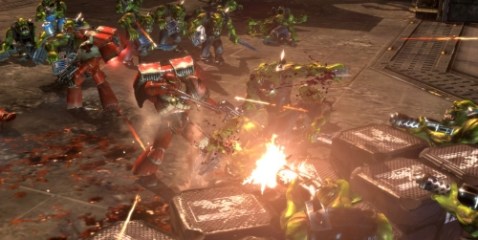
I have the tools to kill all of these orks, so I will kill them and get their stuff, because that is how this works.
In real life, overcoming challenges sometimes leads to rewards. Emphasis on “sometimes.” Sometimes overcoming challenges just means you’ve overcome a challenge. You climbed to the top of the hill, and your reward is seeing the other twelve hills ahead of you while you climb down this one. Or you climbed halfway up the hill when a falcon randomly deposited a sack full of money at your feet. How hard you work has some connection to success in real life, but it is not a perfect correlation by any means.
Games are not dissimilar. The notion is hardwired into gaming that a challenge equals a reward so long as the challenge was not completely self-inflicted (playing Metal Gear Solid one-handed is definitely going to be a challenge, but the game isn’t going to reward you for your determined efforts to make it harder). Yet there are challenges with rewards that seem either far too big or too small for the effort put in, because it turns out that properly balancing a challenge and a reward is really difficult.
The tyranny of games-that-were

Get in there and get wet.
Last week’s tempest in a teacup was the announcement that Nintendo was finally hopping into the mobile games arena, a fact which the rest of the gaming industry responded to chiefly with a sigh and perhaps a muttered “welcome to here” or something similar. This is not revolutionary or stunning. Mobile gaming is as genuine a form of gaming as, well, anything that’s been coming out over the past decade.
What was surprising were the number of people clinging to the idea that this was some major change, as if Nintendo’s refusal to get into the space before now was indicative of a philosophical stance rather than a deeply calcified corporate structure incapable of forward motion.
Nintendo’s issues as a company are best addressed in another article (and probably will be), so I’m not going to go into that here. But it’s always surprised me, to this date, how many people think that the way games were released was indicative of anything more than how things were in terms of technology. The idea that the game arrangement we grew up with as children is in some way indicative of how things ought to be, from here to eternity.
Demo Driver 8: Secret of the Magic Crystals
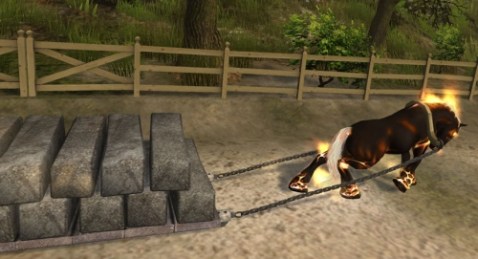
Back in the 90s, I was in a very famous teevee show.
Huh.
One of the weird things about gaming is that there are these shadow genres which exist despite being almost totally ignored by the rest of the population. The Horse Game is one of those genres. There are tons of these games out there, and every single one of them smells like shovelware and, well, horse stables. It’s all about training your horses, breeding them, carefully brushing them, and so forth. And they are legion. These games come out, they keep coming out, and presumably they are in fact making money. How? I don’t know!
I didn’t actually know that Secret of the Magic Crystals would fall into this genre until I clicked the name, but it does indeed. It’s a game about raising not just normal boring horses, but special magical equine creatures like pegasi, unicorns, and if you get particularly lucky 90s sitcom stars. (Not so much, really.) And hey, maybe it was awesome! I knew nothing about this genre, right? Why not give it a shot?
The Seven Deadly Sins of Game Design
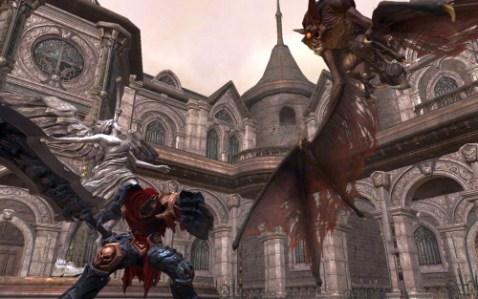
I suppose it’s not really judgement day, but it’s similar.
Woe unto ye, designers, for ye have sinned.
The seven deadly sins in Catholicism are functionally the ur-sins. They aren’t the worst, they’re the roots from which all other sins spring. And I thought it would be edifying to remember that the same concept applies to game design and gameplay, starting from the design side. For there are sins in game design as surely as anything, and some of them are not what you would expect.
Since we’re stressing the idea of the seven deadlies, of course, they should line up to the big ones – greed, envy, sloth, lust, wrath, pride, and gluttony. And I could write for weeks about how those sins are very different from what people usually imagine when they hear those words, like how sloth is less about inaction and more about profound spiritual ambivalence, or how gluttony isn’t just a matter of eating stuff. But that’s really outside the wheelhouse of what is largely a game design blog, isn’t it? So let’s talk about the seven deadly sins of game design.
 Recent Work
- An error has occurred; the feed is probably down. Try again later.
Chocobo Dash
- An error has occurred; the feed is probably down. Try again later.
 Eliot Lefebvre