The Final Fantasy Project: Final Fantasy III, part 10

Artwork from a sketch by Yoshitaka Amano
It’s kind of a shame that this game hasn’t made as big of a deal about Xande as the root of all evil. Sure, he’s the guy behind a whole lot of crap that we’ve dealt with up to this point, but we haven’t seen him or even heard from him directly. Yes, I know, up until we reached the surface world he was kind of frozen in a flooded landscape, but still. It would have been nice to put a face to the name before now, you know? There’s no sense of an emotional grudge match.
Of course, Final Fantasy II tried doing that, and that had its own problems.
At any rate, the last “dungeon” in Final Fantasy III is pretty ornate, composed of four separate dungeons, albeit with one of them as an optional sidequest. Once you’ve broken through the guardian statues with the four Fangs, you’ve got the chance to see the start, but you need those keys from Unei and Doga to really get into the meat of the dungeon. So off we go, back to the spot where we unlocked the final set of jobs, ready to crush the face of whoever stands between us and our goal.
Hard Project: The Dark Tower
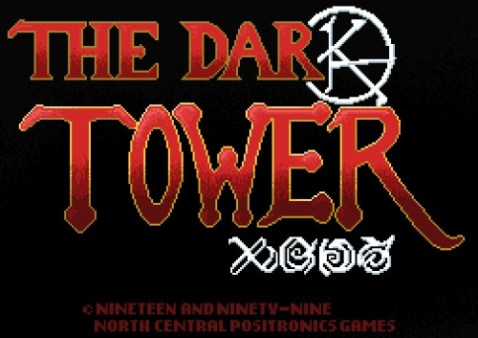
It’s a good game, but you need to play through it 19 times to really get the full experience.
At the heart of everything lies the Tower. The Beams lead to the great Tower, the heart of all worlds, the spoke upon which the wheels of existence turn. The tower is the heart of the battle between the White, the Red, and the Black, a conflict between forces that would preserve life and those that would see it serve more sinister powers or even cast off into nothingness. It would make, I think, a pretty great video game.
I don’t need to point out that we’ve never actually gotten a proper game based on The Dark Tower, do I?
Stephen King’s sprawling story about Roland Deschain has seeped its way into a lot of his other books. Several comics have been made chronicling the time between Roland first becoming a Gunslinger (essentially a paladin with revolvers) and the quest outlined in the books, tromping across the world to seek out the source. It’s been in development hell for an adaptation for years. And it’d make a pretty satisfying game… but I don’t think we’re ever going to get to play one. For some very good reasons.
Demo Driver 8: Ring Runner: Flight of the Sages (#206)

It’d be really nice if some of these games provided better screenshots instead of looking like a hot mess in still frames.
Let’s hear it for the crazy ambitious indie game.
I’m not talking about indie games that come down to “examining a new idea,” that’s just a thing. No, I’m talking about indie titles that see a big idea and just go for it, ones that say things like “let’s mash together space exploration, sim flight elements, and RPG gameplay into a single space.” I’m talking about games that bite off way more than they can chew or even fit in their mouth at once.
Ring Runner: Flight of the Sages definitely falls under that header. It is, in many ways, a mess – but it’s a mess because it’s pulling in a bunch of disconnected genres and doing the best it can to try and make all of them work together. I shan’t scorn it for the parts where it falls down, because I love how enthusiastically it tries. There are a lot of games all going on at the same time here, and while I’ll be the first to say that it doesn’t seem to quite congeal, boy does it ever try hard. Which is pretty keen.
Telling Stories: Roleplaying is stressful
 Here’s the thing about roleplaying – a lot of people who have never done it have very strong ideas about what it entails, which are usually some mixture of well-meaning and wrong. Mostly wrong.
This is not out of malice but out of simple reality. It’s very easy to understand what’s required to get good at PvP in a game; there’s plenty of supplemental material available. Ditto raiding, small-group content, or whatever else your game offers. But one of the reasons that I felt (and still feel) that having a regular roleplaying column is valuable is because no one talks about what that requires. No one mentions how much effort goes into making these things happen.
Mike Mearl, a designer working on Dungeons & Dragons, said at one point that tabletop roleplaying is twenty minutes of fun packed into four hours. Roleplaying online offers a slightly better ratio, but if you’ve never taken part, you don’t realize that there’s a lot of work that goes into it. A lot of the advice I’ve given, both here and in Storyboard, is about trying to minimize that work, or at least make the work as pleasant as possible. But it’s still work just the same.
Challenge Accepted: Do it yourself
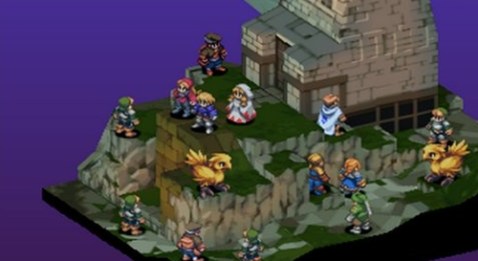
This is not an SCC, but it’s a nice shot.
Self-inflicted challenges and I have a long and lengthy relationship, due in no small part to my love of Final Fantasy Tactics. An idle conversation among fans started the Straight Character Challenge – a full group of characters, all the same class, making maximum use of the game’s mechanics and taking down every battle from start to finish. It took a long while, but every single class proved possible, albeit in many cases through abuse of the AI and odd little loopholes in the game’s coding.
I was never a super-active part of the community there, but I was active for a while, and I still admired the challenge a lot from the sidelines. The thing is that self-inflicted challenges both do and do not factor into a game’s difficulty. Sufficiently complex games lead to the creation of more such challenges, and they’re interesting, but they also don’t tie into the actual game at all. And, in some cases, they get co-opted by the developers for just that reason.
 Recent Work
- An error has occurred; the feed is probably down. Try again later.
Chocobo Dash
- An error has occurred; the feed is probably down. Try again later.
 Eliot Lefebvre